From Reactive Firefighting to Structured Supplier Quality Control Architecture
Executive Context
Operational volatility is rarely the result of a single catastrophic failure; it is usually the compound effect of undocumented, micro-level decisions breaking down at scale. A prominent multi-region electronics distributor approached Quanzar Technologies™ facing a severe operational breaking point. Quality events were managed reactively, supplier disputes were rising, and return handling remained deeply manual.
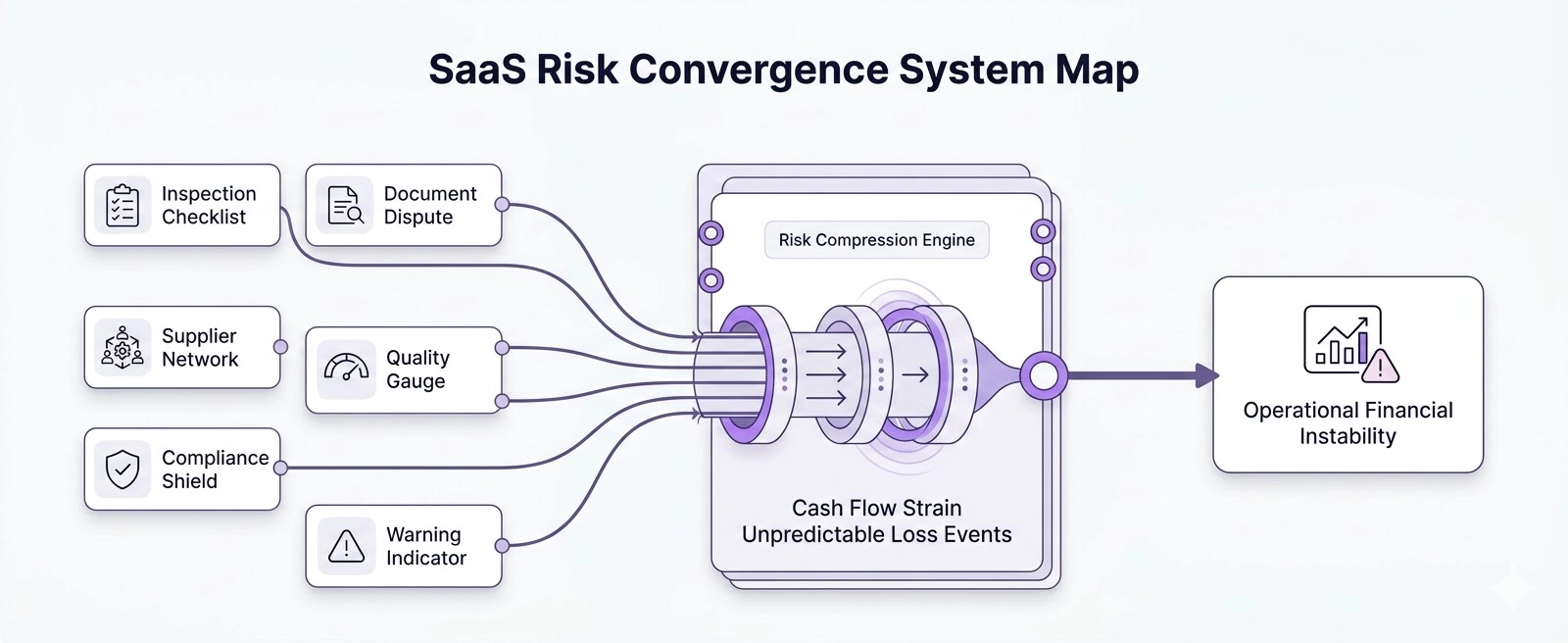
Most critically, the organization lacked centralized risk visibility. Escalations were heavily dependent on the individual experience of floor managers, leading to inconsistent inspection standards across regions. These undocumented disputes caused severe cash flow strain as finance teams struggled to forecast loss exposure and negotiate credit recoveries.
The core issue was not a lack of effort or personnel; it was an architectural failure. The organization lacked an encoded SmartOps™ governance framework to convert historical supplier data into real-time operational routing.
Initial Operational Topology
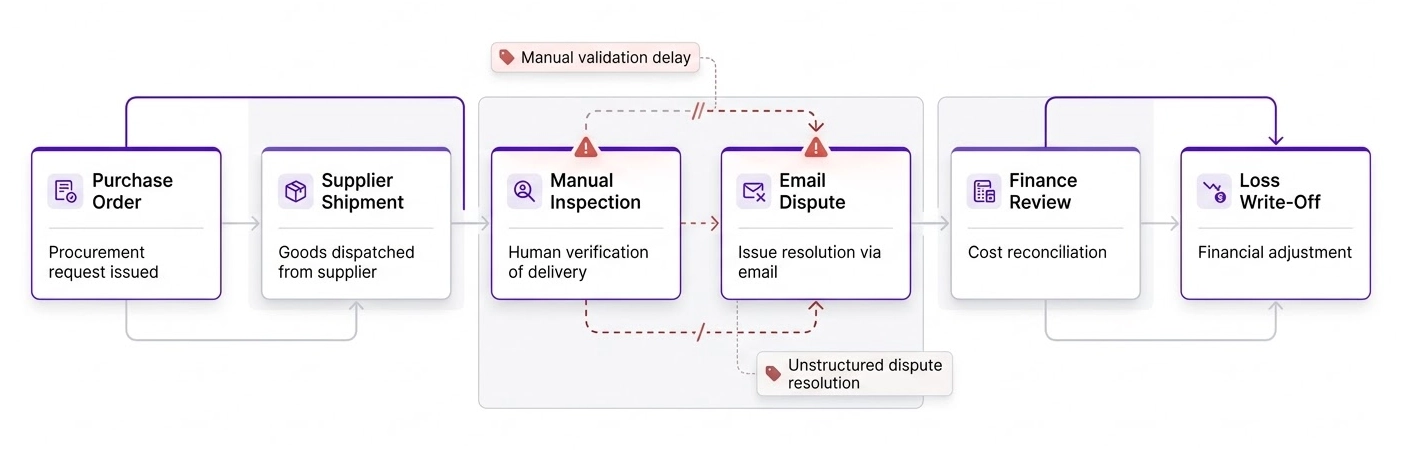
To diagnose the root cause, we mapped the legacy execution framework. The structural breakdown became immediately apparent when tracing the lifecycle of a purchase order through to a dispute.
| Operational Stage | Legacy Execution | Observed Weakness |
|---|---|---|
| Intake | Supplier Shipment Receipt | No upfront risk flagging |
| Validation | Manual Inspection | Inspection criteria varied strictly by regional bias |
| Exceptions | Email-Based Dispute | Handling was completely undocumented and unstructured |
| Financial Review | Supplier Negotiation | Tribal knowledge required; no structured decision audit trail |
Loss events were unpredictable because there was no systemic logic governing them. Quality control was treated as an isolated event rather than an interconnected data point.
The Transformation Strategy
Instead of adding more inspectors or deploying superficial management dashboards, we engineered a Quanzar Risk-Governed Execution Architecture. By leveraging our Decision Acceleration Systems, we fundamentally redesigned the inspection logic, dispute workflow, risk scoring mechanisms, and escalation routing.
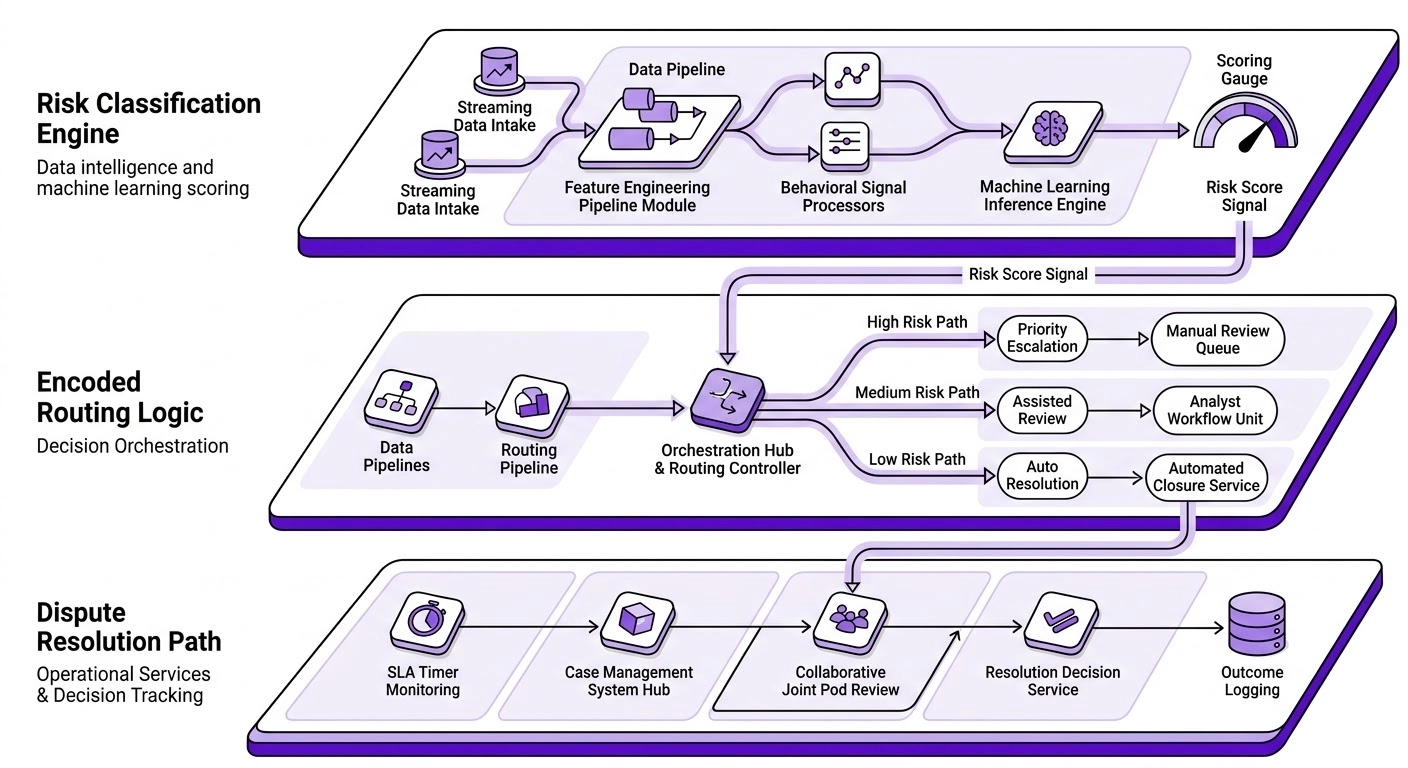
The intervention logic was strictly objective. We removed manual bias by hard-coding risk parameters directly into the operational workflow.
Core Structural Components
The architecture was deployed via five primary interconnected components, designed to secure operations at scale.
1. Supplier Risk Classification Layer
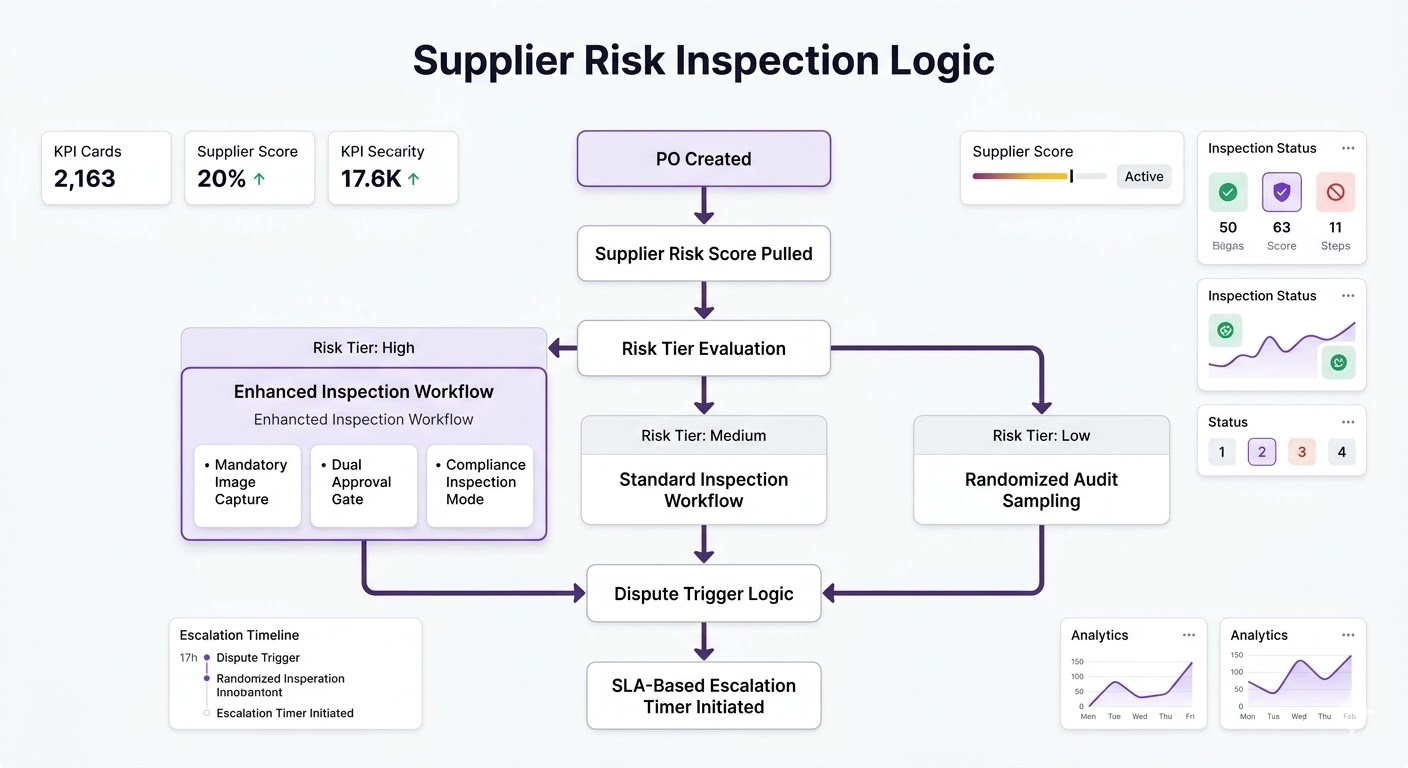
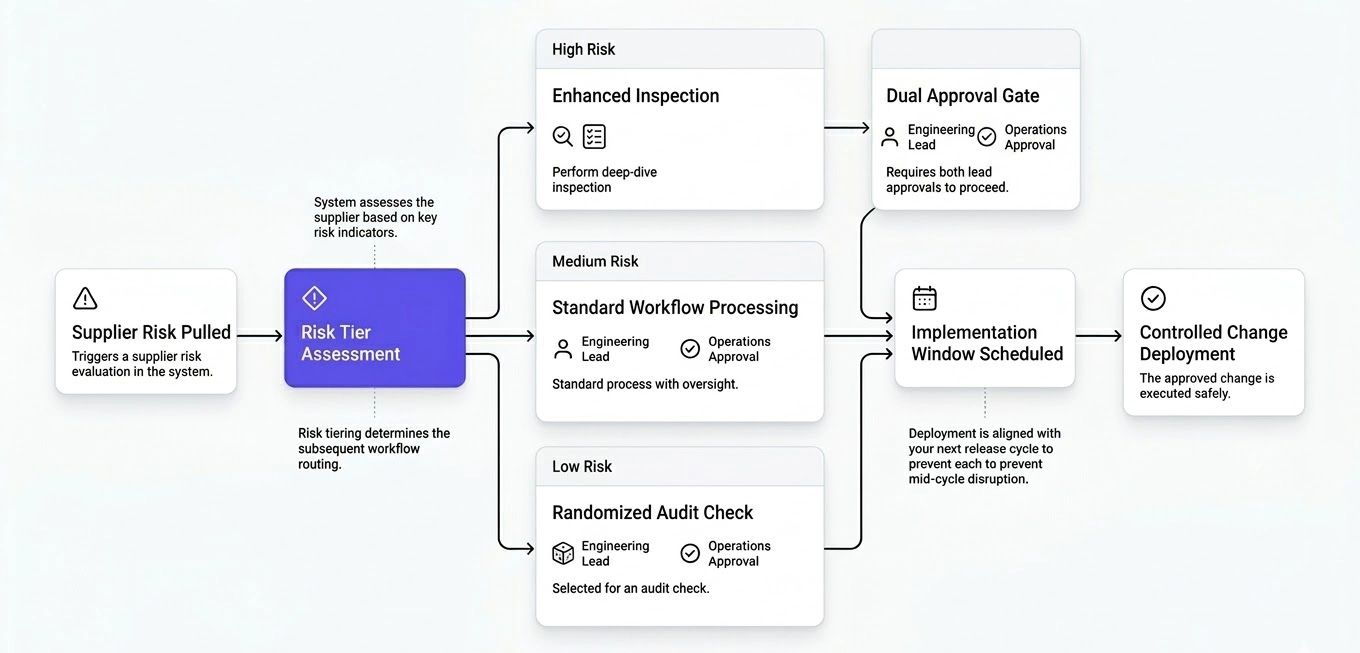
We introduced rigorous, automated risk variables. Tiers were determined by historical defect rates, return frequency, credit issuance ratios, shipment delay patterns, and region-based compliance risk. Supplier tiers automatically dictated inspection intensity, entirely removing manual operator bias.
2. Encoded Inspection Workflow
Inspection processes were converted from static checklists to dynamic, logic-driven paths. For example, if a component type was identified as high-reliability and the end-customer sector was aerospace, the system automatically applied an Extended Validation SOP requiring mandatory photo archiving and dual engineer sign-off.
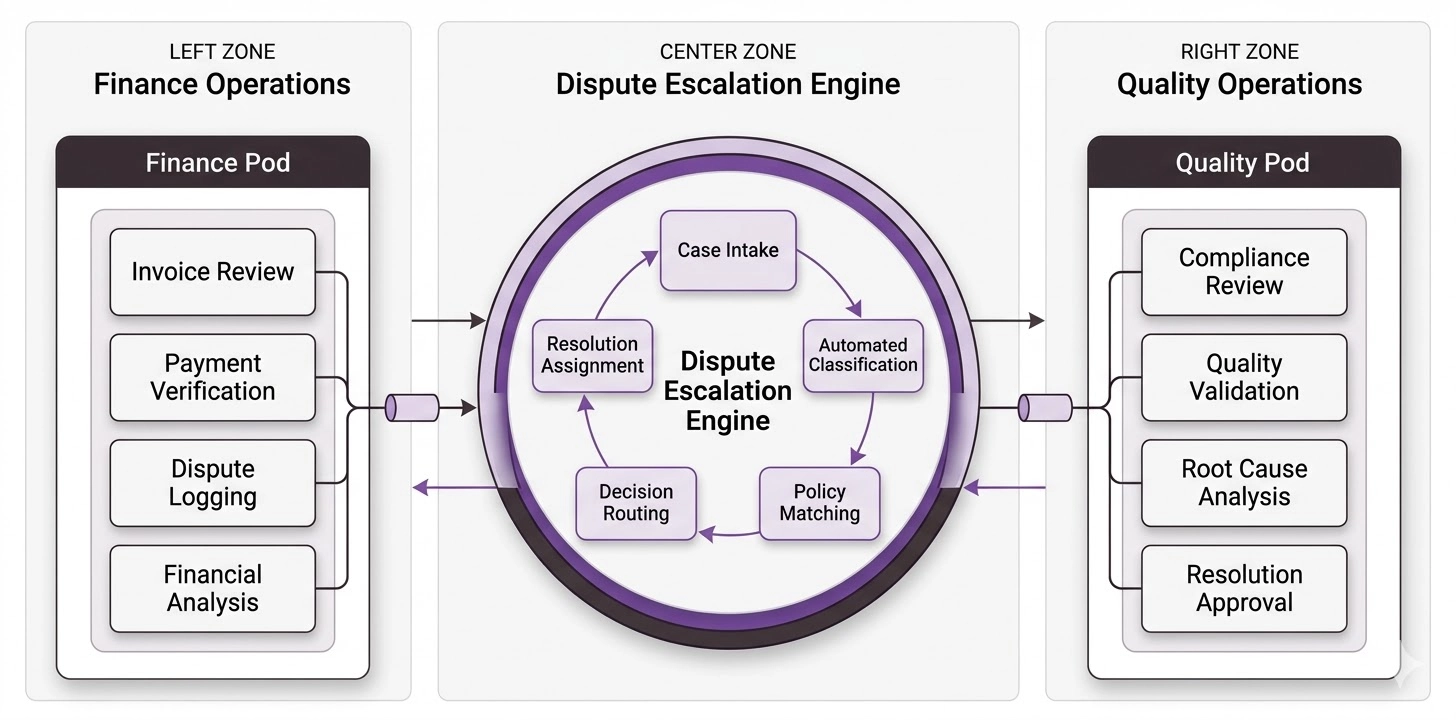
3. Structured Dispute Escalation Engine
We replaced email-based disputes with an Intelligent Execution Engine. SLA timers were initiated automatically, triggering escalations at defined intervals based on role-based authority mapping. This created a predictable and tightly controlled exception management process.
4. Financial Risk Visibility
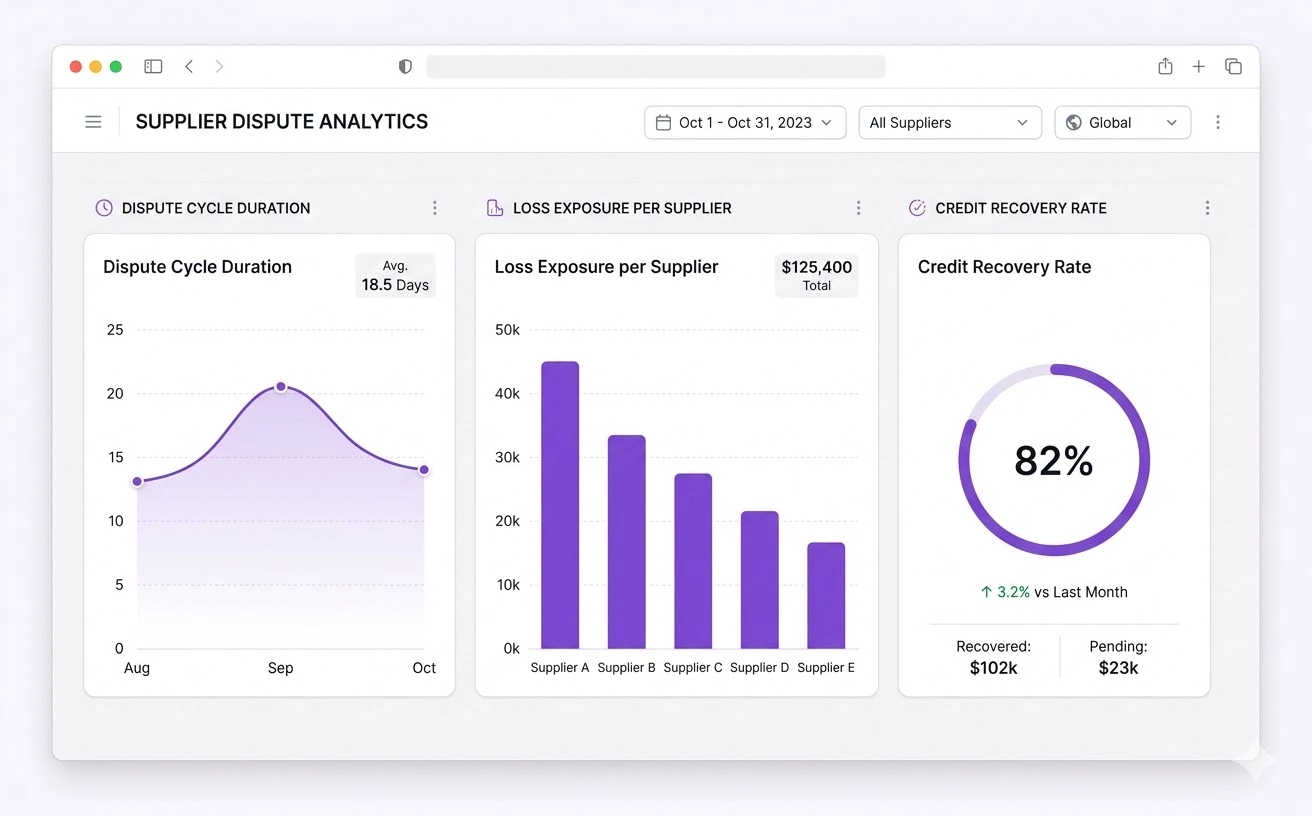
New structural metrics provided finance pods with structured forecasting capability. Real-time dashboards tracked Loss Exposure per Supplier, Credit Recovery Rates, Dispute Cycle Duration, and Risk-Adjusted Margin Impact.
5. Centralized Decision Logging
Operating on a Secure by Design Architecture, every joint decision made between Finance and Quality pods was routed through a structured resolution path resulting in a logged, traceable, and auditable outcome.
Operational Implementation
Deploying structural governance required a phased execution model to ensure business continuity.
| Implementation Phase | Focus Area | Outcome Delivered |
|---|---|---|
| Phase 1: Diagnostics | Historical data ingestion and risk parameter definition | Baseline supplier risk scoring mapped |
| Phase 2: Logic Encoding | Hard-coding IF/THEN inspection routing | Removal of static regional checklists |
| Phase 3: Escalation Engine | Deploying SLA timers and authority mapping | Elimination of email-based exception handling |
| Phase 4: Alignment | Joint Finance & Quality pod integration | Unified operational dashboard and audit logging |
Performance Measurement
We believe in verifiable structural improvements over fabricated percentage claims. Measurement was anchored to operational stability and predictive capability.
| Measured Metric | Operational Impact |
|---|---|
| Dispute Cycle Time | Reduced significantly through structured, automated routing |
| Escalation Delays | Eliminated completely by removing manual follow-ups |
| Supplier Transparency | Established full historical risk views integrated at PO creation |
| Inspection Consistency | Standardized objectively across all global regions |
Measured Outcomes
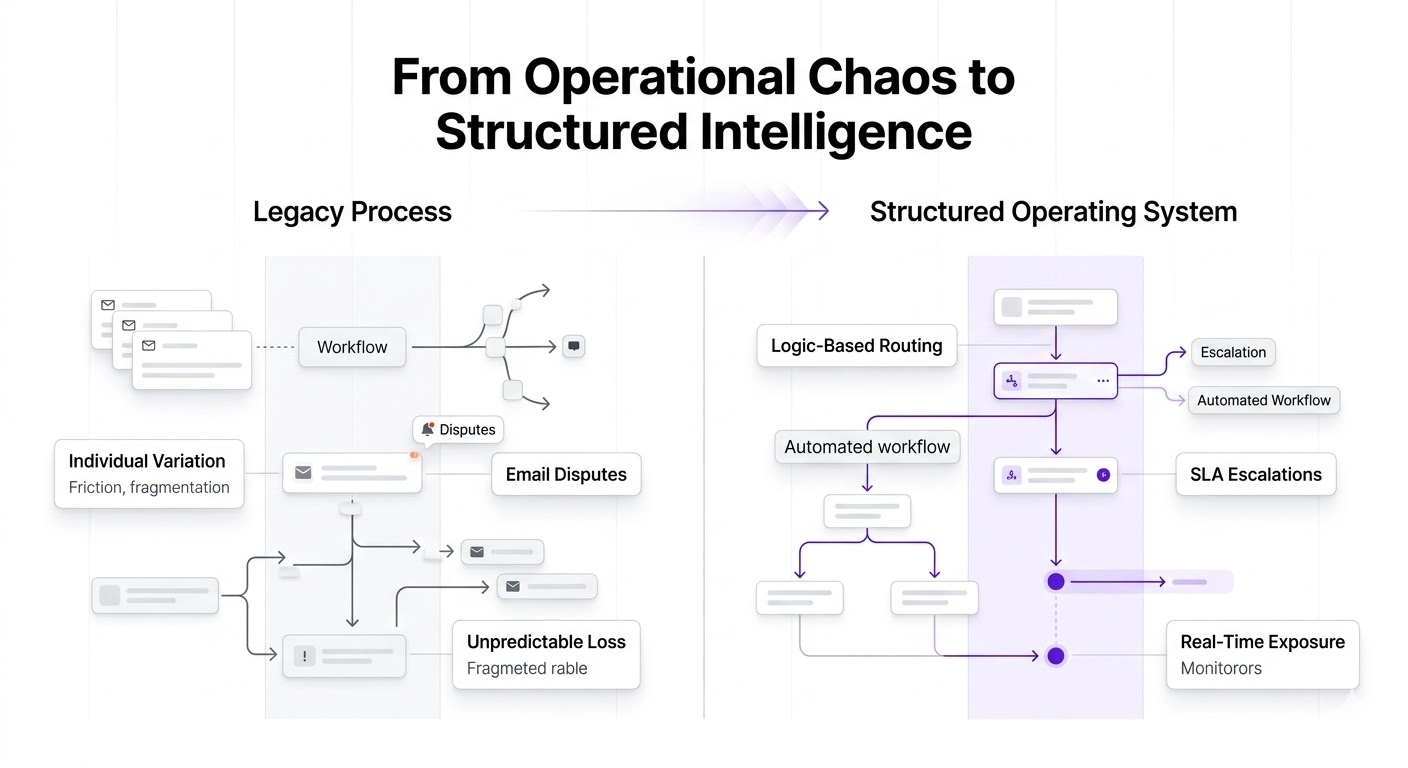
By shifting from reactive management to a structured operational topology, the enterprise stabilized its cash flow and insulated itself from vendor volatility.
| Operational Vector | Legacy State | Structured State |
|---|---|---|
| Inspection Standard | Varied by individual operator | Risk-tiered, logic-based inspection |
| Exception Handling | Email-based disputes | SLA-triggered automated escalation |
| Decision Authority | Manager-dependent logic | Role-encoded authority mapping |
| Financial Impact | Surprise exposure and delayed cash recovery | Real-time exposure visibility |
| Supplier Intelligence | Reliant on tribal memory | System-embedded historical risk scoring |
Strategic Insights
This deployment highlights fundamental truths regarding Digital Governance OS at scale.
1. Manual Supervision is Finite
Supplier volatility cannot be supervised manually. Attempting to scale oversight via headcount ultimately fragments inspection consistency.
2. Action Must Be Scored
Without assigning a historical risk score to a supplier, an organization treats every interaction as an isolated, high-risk event.
3. Logic Must Be Routed
Decisions should not linger in inboxes. Automated routing forces accountability and adherence to corporate compliance.
4. Escalations Require SLAs
Financial exposure increases the longer a dispute sits unresolved. SLA timers ensure capital recovery is treated with operational urgency.
5. Audits Drive Behavior
When every joint decision is logged, tribal knowledge is converted into institutional equity, securing the firm against turnover.
6. Resilience is Structured
Operational resilience is not a cultural trait; it emerges directly from structured governance and encoded architectural design.
Where This Applies
This architectural framework is highly translatable for organizations dealing with complex supply chains, stringent compliance standards, and significant capital locked in dispute cycles. It is particularly effective for:
- Semiconductor distributors managing high-value, high-volatility components
- Aerospace suppliers requiring rigorous, verifiable compliance checks
- Electronics manufacturers scaling multi-region procurement operations
- Defense contractors needing strictly audited decision trails
Transform Your Operations
Is your organization relying on tribal memory instead of structural logic?
Book a Diagnostic Calculate Operational Waste Explore SmartOps™