Converting RFQ Chaos Into Margin-Controlled Intelligence
Executive Context
A global independent semiconductor distributor, operating rapidly expanding sales and sourcing hubs across the USA, Asia, and Europe, was processing thousands of Requests for Quotes (RFQs) per week. While top-line revenue was strong, executive leadership identified a dangerous underlying operational reality: gross margins (GP) were highly volatile, and the company lacked structural control over its own growth.
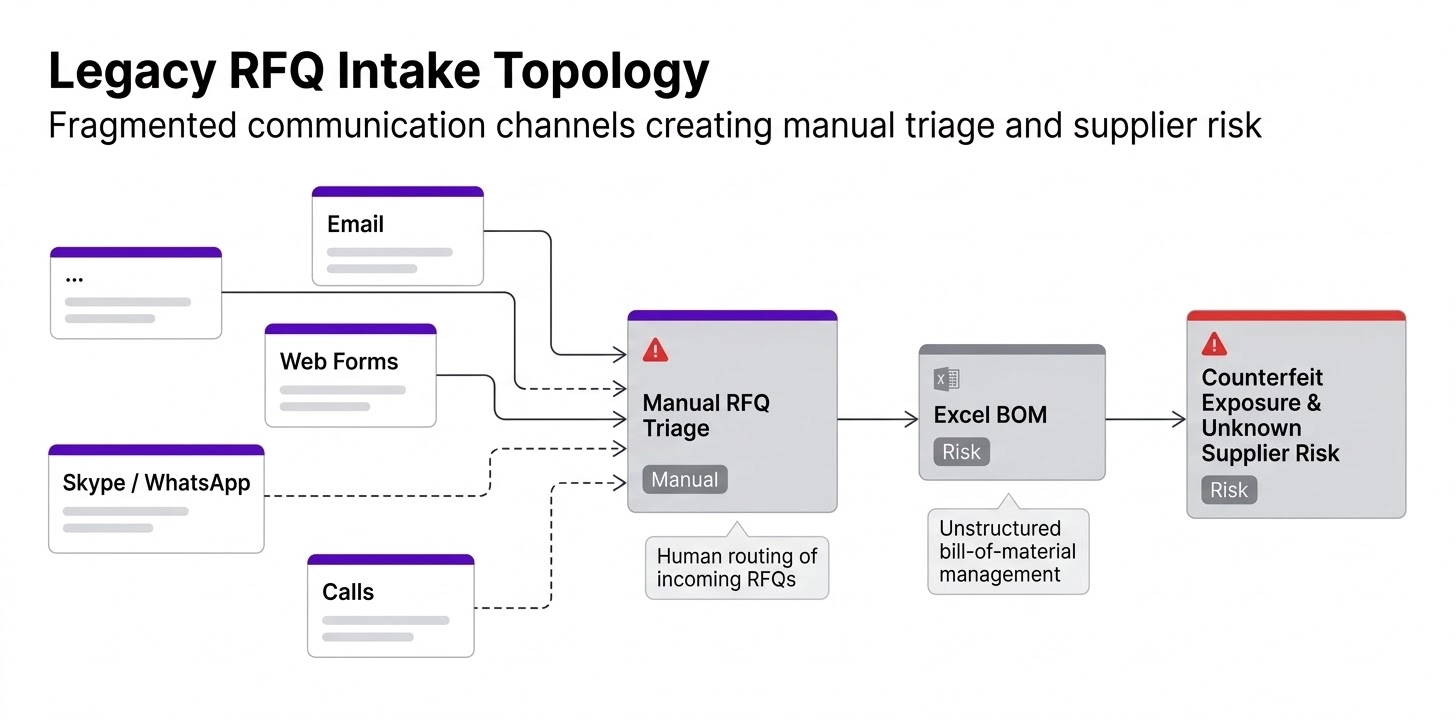
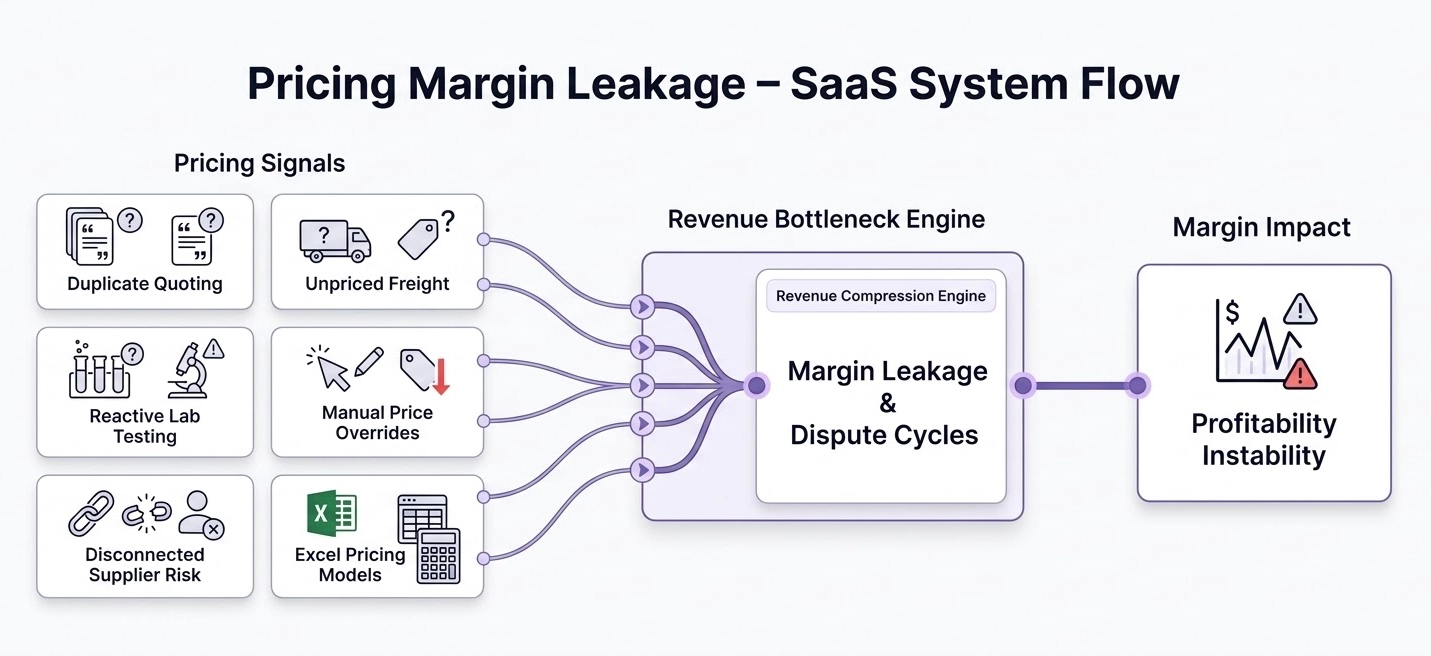
The firm was operating in a state of high-volume chaos. Sales engineers were forced to manually triage RFQs and spent hours searching for alternate components or managing massive 800-line BOMs via emailed Excel spreadsheets. Duplicate quoting across regions was common. Because supplier risk and AS6081 counterfeit exposure were typically only discovered after shipment or testing failures, credit disputes and inventory aging severely impacted cash flow.
The firm was growing, but its execution discipline was not. The organization partnered with Quanzar Technologies™ to fundamentally shift from a manual trading model into an operationally intelligent execution framework.
The Breakdown of Legacy Semiconductor Distribution Operations
Our initial diagnostic mapped the legacy commercial workflows, revealing profound structural weaknesses that directly contributed to margin leakage and counterfeit exposure.
| Structural Weakness | Operational Reality | Commercial Impact |
|---|---|---|
| RFQ Routing Chaos | Requests arrived randomly via email, web forms, Skype, and WhatsApp. | High-margin opportunities were lost in a sea of low-value noise. |
| BOM Complexity | 200–800 line BOMs processed manually in Excel with zero automated pricing logic. | Underpriced lines, missed cross-sells, and margin leakage. |
| Supplier & Counterfeit Risk | No real-time AS6081 compliance routing or quality tier integration. | Risk discovered after shipment; high dispute cycle times. |
| System Fragmentation | Disconnected ERP, standalone CRM, and isolated quality lab systems. | Data existed, but unified, rapid execution was impossible. |
Implementing Semiconductor Execution Architecture
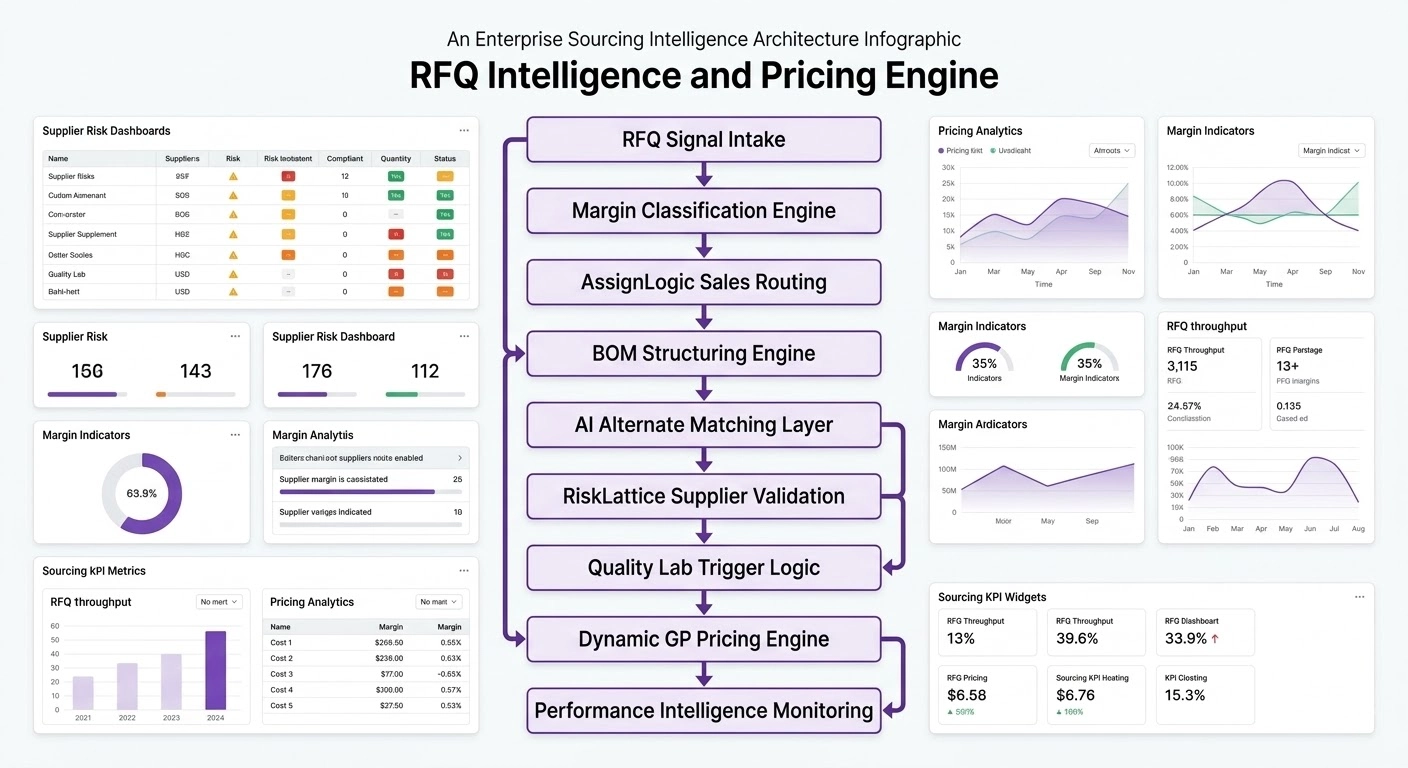
Instead of hiring more sales engineers to process the chaos manually, Quanzar engineered the Semiconductor Execution Architecture™. This approach leverages our Digital Governance OS to structure every RFQ, BOM, and supplier interaction before human intervention is even required.
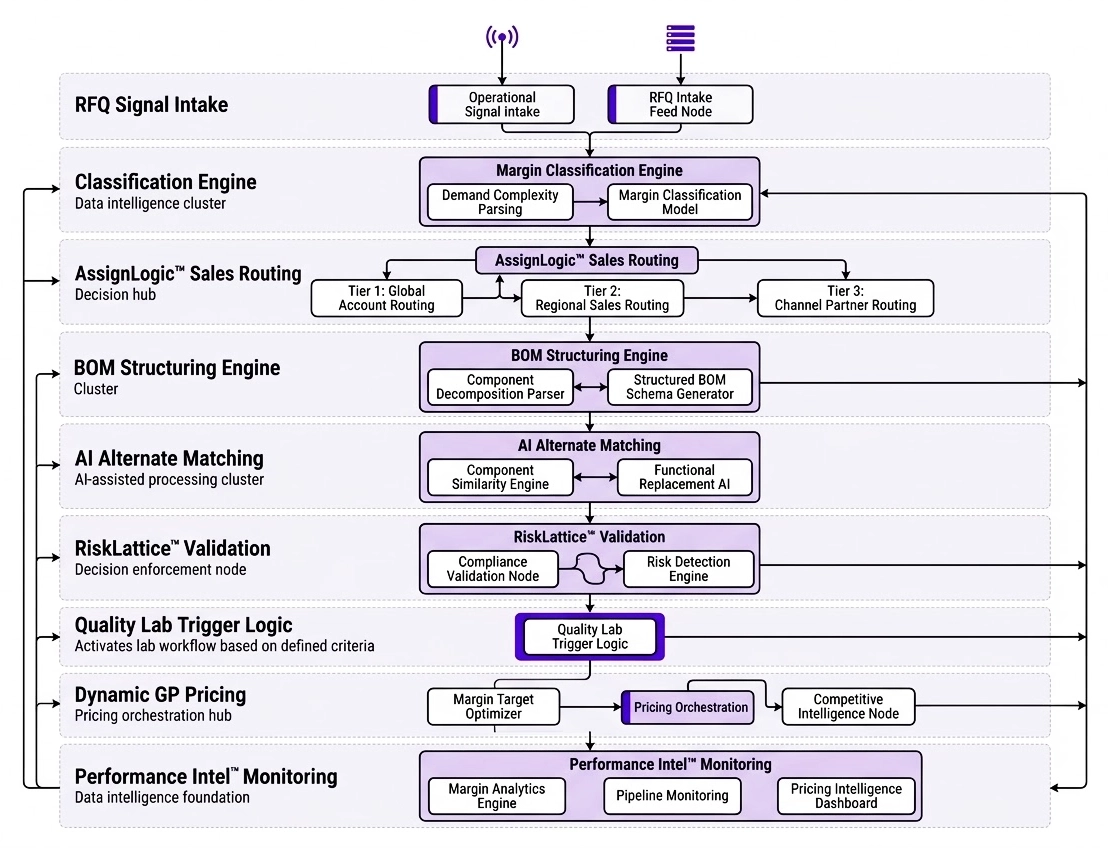
By routing the massive flow of daily components through an automated intelligence layer, every RFQ is scored, every BOM is structurally priced, and every supplier is evaluated for risk.
Core Structural Components of BOM Orchestration
We stabilized the trading floor by deploying six deeply encoded structural components.
1. Intelligent RFQ Triage
Inbound RFQs are no longer prioritized by whichever engineer reads the email first. Requests are structurally classified by margin potential, volume size, customer tier, urgency, and risk exposure. Low-value noise is automatically filtered or pushed to automated channels, while high-margin opportunities are routed immediately to senior staff.
2. BOM Management Intelligence
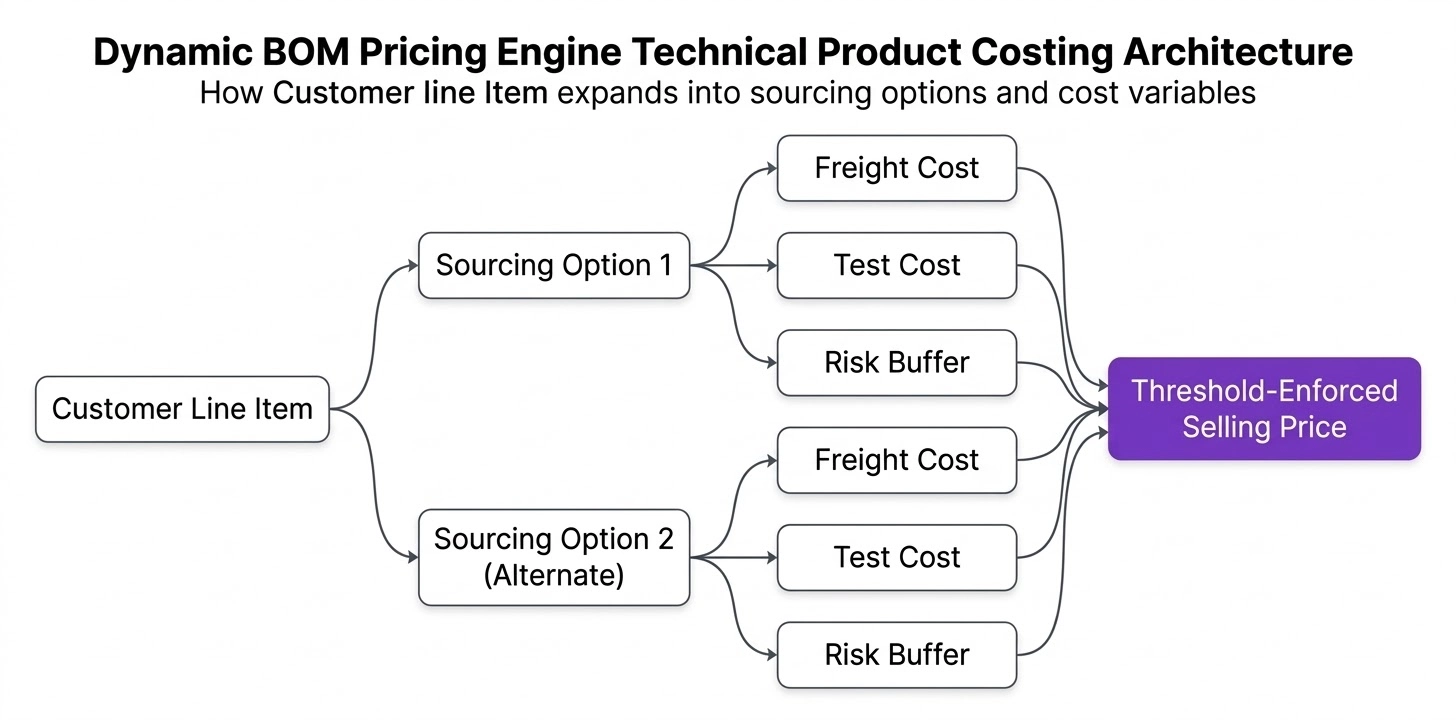
We replaced massive, error-prone Excel files with a structured BOM Structuring Engine. Each line item now supports multiple sourcing options simultaneously. The system auto-calculates GP%, dynamically adjusting the selling price by factoring in real-time freight, testing costs, and risk buffers. Margin thresholds are strictly enforced via Decision Acceleration Systems, eliminating underquoting.
3. AI Alternate Matching
Using transformer-based AI models, the architecture instantaneously identifies drop-in alternates, form-fit-function substitutes, and cross-manufacturer equivalents. A strict match-confidence threshold is enforced before the system allows the alternate to be proposed, drastically increasing sales velocity without compromising technical integrity.
4. Supplier Scoring & Compliance (RiskLattice™)
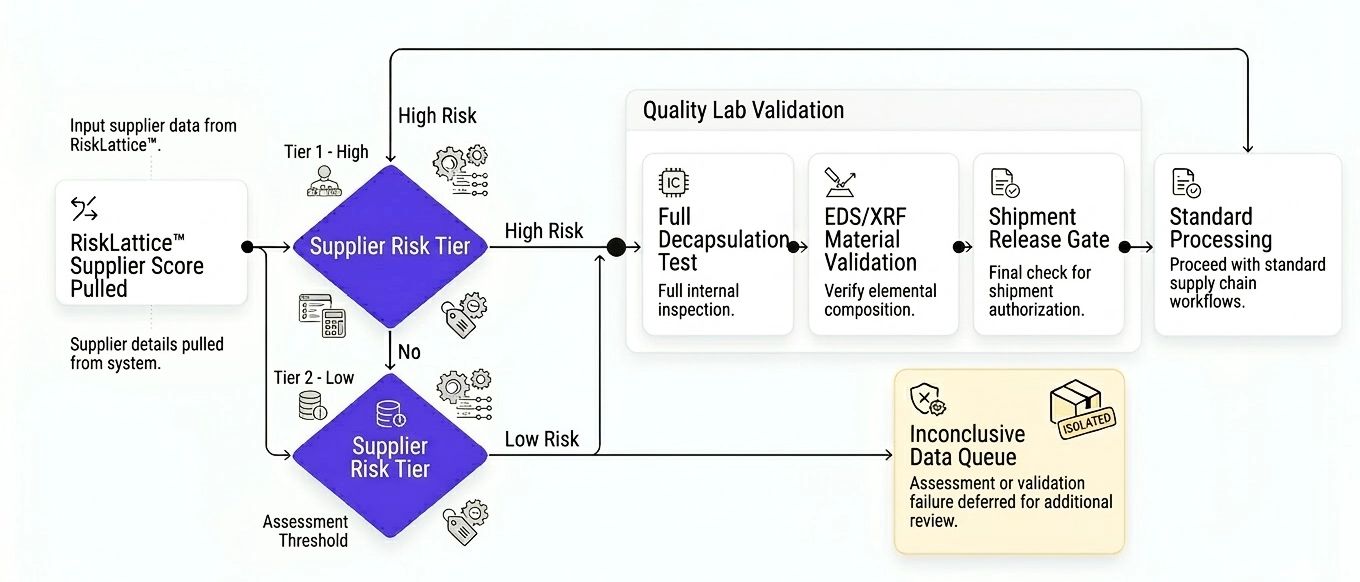
We encoded independent distribution risks directly into the routing logic using Secure by Design Architecture. Suppliers are scored based on historical defect rates, AS6081 exposure, and lead-time reliability. High-risk suppliers automatically trigger mandatory testing requirements and require a larger margin buffer to be added to the selling price to absorb potential friction.
5. Quality Lab Integration
Quality control was integrated directly into the sourcing workflow. If a supplier is flagged as high-risk, the system automatically generates a trigger for the lab: requiring full decapsulation tests, EDS/XRF validation, and applying a hard shipment release gate. Testing is no longer optional or based on memory.
6. Margin & Dispute Intelligence
Through Performance Intel™, GP variance per line, credit memo ratios, dispute cycle durations, and aging inventory risks are tracked live. Margin became measurable at the immediate execution stage—not weeks later during the accounting close.
Measuring Semiconductor Commercial and Financial Impact
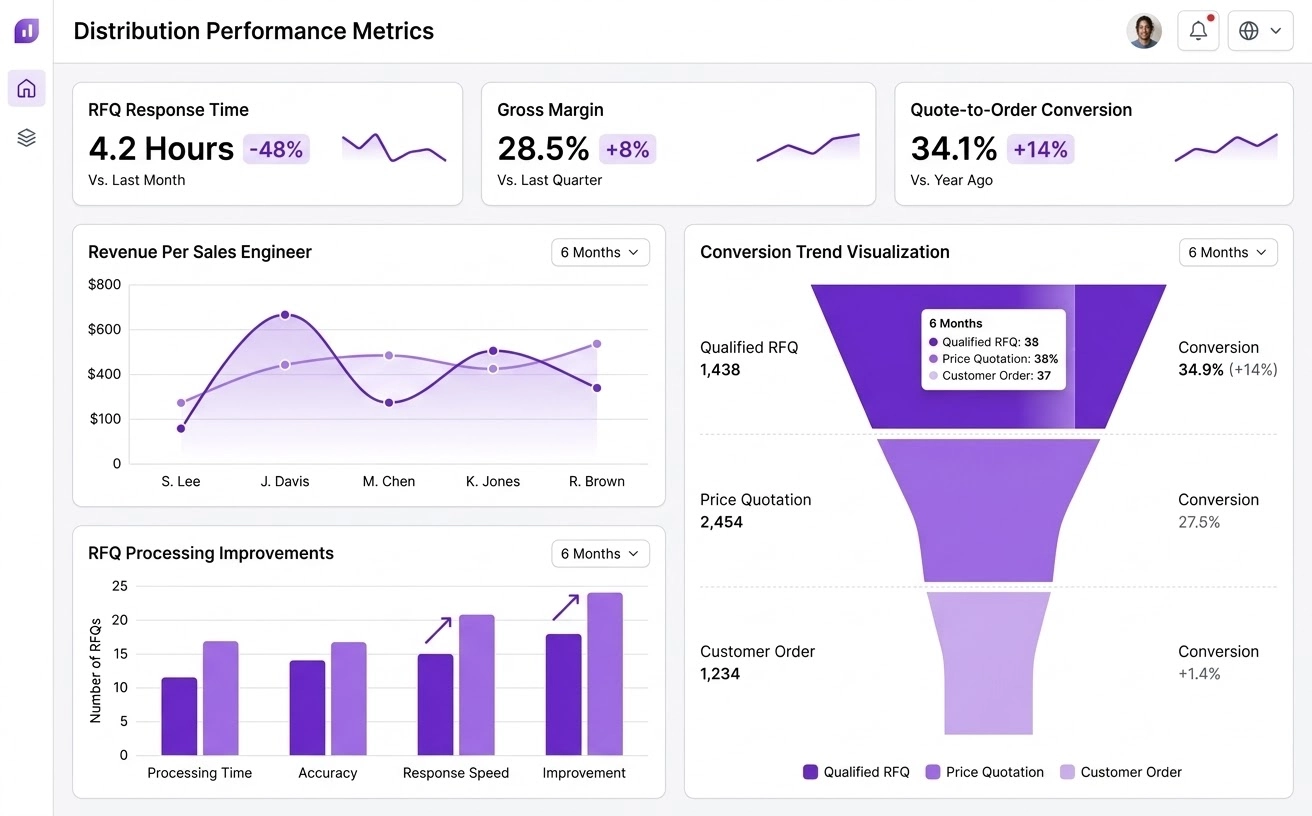
Following a 6-12 month stabilization horizon, the organization transitioned from a volatile trading firm into a structurally disciplined enterprise. The deployment yielded massive commercial acceleration.
| Commercial Performance Metric | Measured Impact |
|---|---|
| RFQ Response Time | Reduced by 48% |
| BOM Processing Time | Reduced by 55% |
| Quote-to-Order Conversion | Increased by 14% |
| Revenue per Sales Engineer | Increased by 18% |
| Risk & Financial Metric | Measured Impact |
|---|---|
| Gross Margin Improvement | 5–8% uplift across all regions |
| Supplier Disputes | Reduced by 22% |
| Counterfeit Exposure Incidents | Reduced materially via structured lab triggers |
| Credit Memo Issuance | Reduced by 19% |
| Inventory Aging | Reduced by 15% |
Measured Outcomes
Revenue increased substantially, but not because of aggressive hiring or increased market spend. It grew because the firm enabled faster structured quoting, better alternate capture, strict margin discipline, and encoded risk-adjusted pricing.
| Operational Vector | Legacy Trading State | Structured Execution State |
|---|---|---|
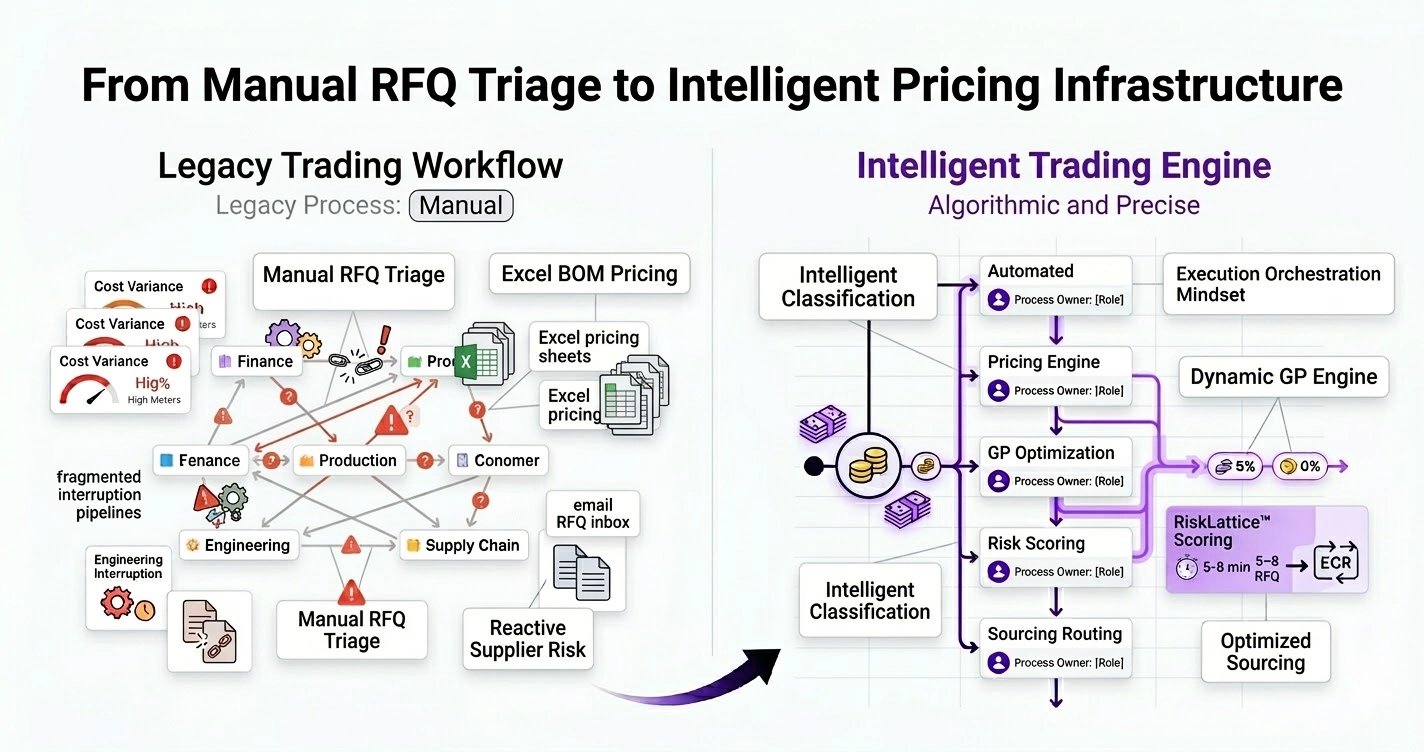
| RFQ Handling | Manual triage by urgency | Intelligent classification by margin |
| BOM Pricing | Calculated manually in Excel | Dynamic GP engine adjusting for freight & risk |
| Supplier Risk | Unknown until failure | RiskLattice™ historical scoring |
| Lab Testing | Optional and disconnected | Structured trigger logic (AS6081) |
| Margin Visibility | Unknown until final invoice | Real-time GP tracking at the quote stage |
Strategic Insights on Margin Control and Sourcing
This engagement confirms several critical insights for independent distributors seeking to leverage SmartOps™.
1. Margin Can Be Engineered
Gross margin is not a passive outcome of market pricing. By structurally factoring in freight, testing, and risk buffers at the BOM level, margin is engineered upfront.
2. Velocity Requires Structure
You cannot scale RFQ volume manually. Faster quotes only happen when low-value noise is programmatically separated from high-margin opportunities.
3. Risk Must Be Encoded
Relying on buyer memory to flag a bad supplier guarantees counterfeit exposure. Supplier risk scores must automatically trigger mandatory quality gates.
4. AI Drives Alternate Capture
Cross-referencing alternates manually is too slow. Governed AI matching drastically increases the surface area of what you can successfully quote and supply.
5. Disputes Destroy Cash Flow
High volumes of credit memos and returns are the ultimate symptom of disconnected sourcing and quality teams. Unifying them protects working capital.
6. Growth Must Be Disciplined
Scaling a trading operation without execution architecture simply scales the chaos. Growth is only profitable when it is tightly disciplined.
Where This Applies
The Quanzar Semiconductor Execution Architecture™ is specifically designed for high-volume component distribution environments where speed, compliance, and margin control are paramount. It applies to:
- Independent semiconductor distributors managing high RFQ volume
- Electronic component brokers handling massive, multi-line BOMs
- Franchise distributors seeking to optimize their independent sourcing arms
- Organizations requiring strict AS6081 and counterfeit mitigation compliance
Automate Your Component Distribution
Is manual BOM processing and unknown supplier risk choking your commercial velocity?
Book a Diagnostic Calculate Operational Waste Explore SmartOps™