Converting SaaS Chaos into Structured Execution Architecture
Executive Context
A mid-sized manufacturer had spent five years investing heavily in digital transformation. On paper, leadership believed they were technologically advanced. They had deployed an ERP platform, an MES system, dedicated procurement SaaS, quality management software, a maintenance tracking tool, a BI dashboard suite, and had recently integrated AI forecasting models and chat-based AI assistants.
Operationally, however, the organization was deeply fragmented. They had acquired digital tools, but they entirely lacked digital discipline. Because each department operated exclusively inside its own siloed system, there was no structured cross-system execution logic. Systems were connected technically via APIs, but they were not orchestrated operationally.
As a result, production plans changed daily, rework was frequent due to misinterpreted release statuses, and inventory accumulated despite the presence of sophisticated predictive tools. Substantial capital had been invested in AI and software with zero measurable ROI. The organization engaged Quanzar Technologies™ to diagnose why their digital transformation was failing to produce operational stability.
The Breakdown of Manufacturing Digital Transformation
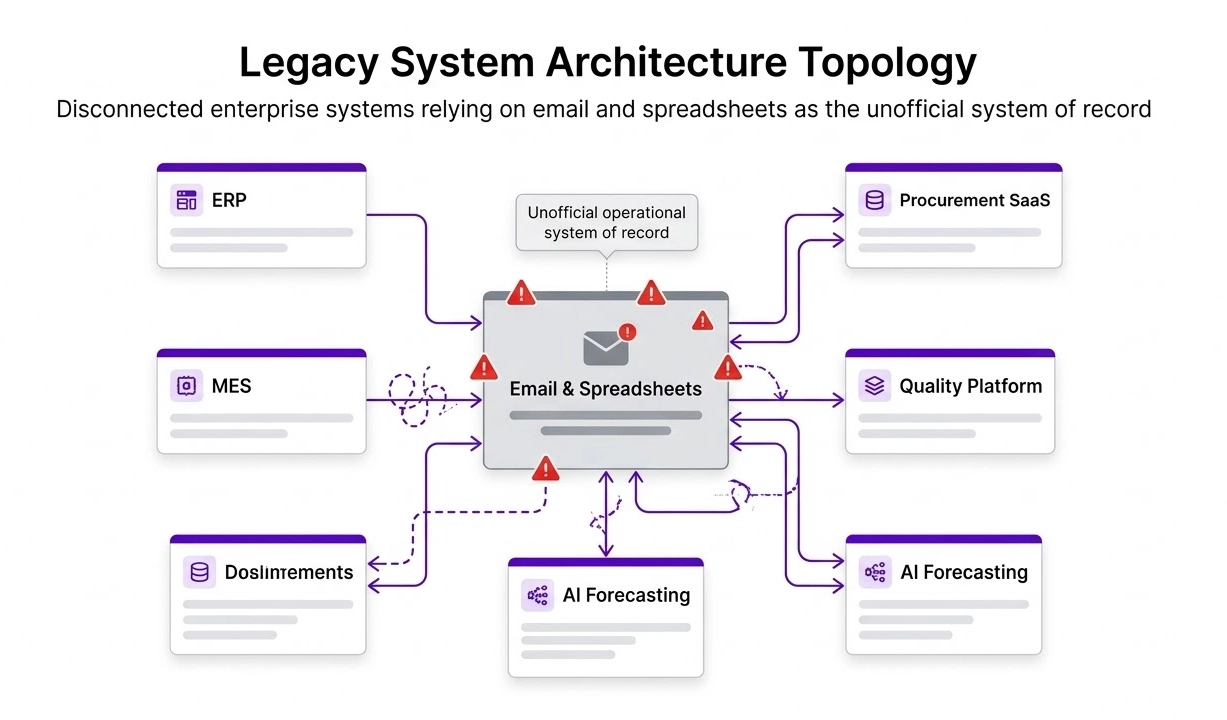
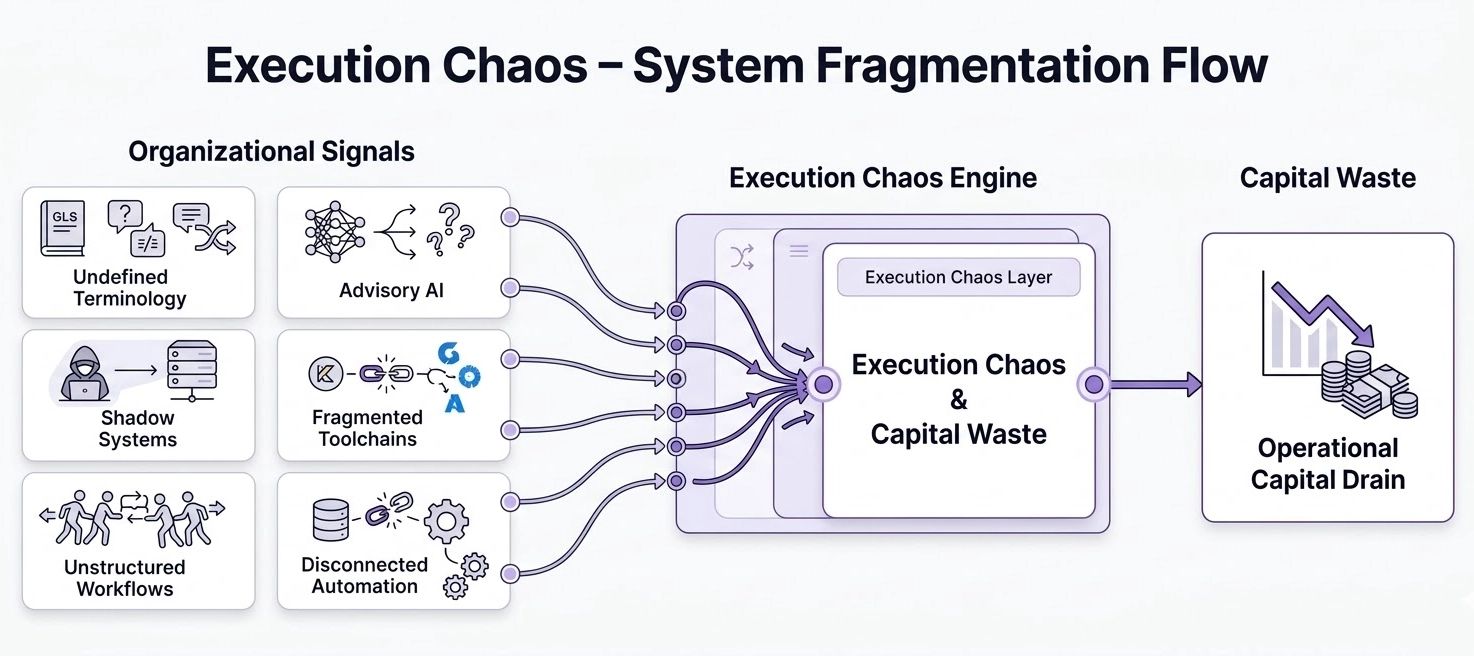
Our initial diagnostic stripped away the impressive BI dashboards to map the actual execution flow. We discovered that while the company possessed modern software, the execution of work remained fundamentally broken.
| Structural Breakdown | Operational Reality | Facility Impact |
|---|---|---|
| Email as the True System of Record | Critical approvals occurred via email, Slack, and verbal confirmation. | No authoritative record of who owned final decisions or version control. |
| Undefined Technology Discipline | "Released to Production" and "Critical Part" had no uniform criteria. | Misinterpretations led to massive rework and daily plan volatility. |
| Advisory AI Implementation | Forecast models existed but were not tied to procurement triggers. | AI existed to inform, not to drive execution or automate workflow. |
| Data Fragmentation | Excel sheets actively overrode ERP data without logging. | Duplicate part definitions and conflicting KPI calculations. |
Implementing a Technology Execution Architecture
Our intervention strategy was strict: Quanzar did not replace a single existing software system. Adding more SaaS to solve a SaaS problem only scales the chaos. Instead, we introduced pure operational orchestration through the Quanzar Manufacturing Execution Architecture™.
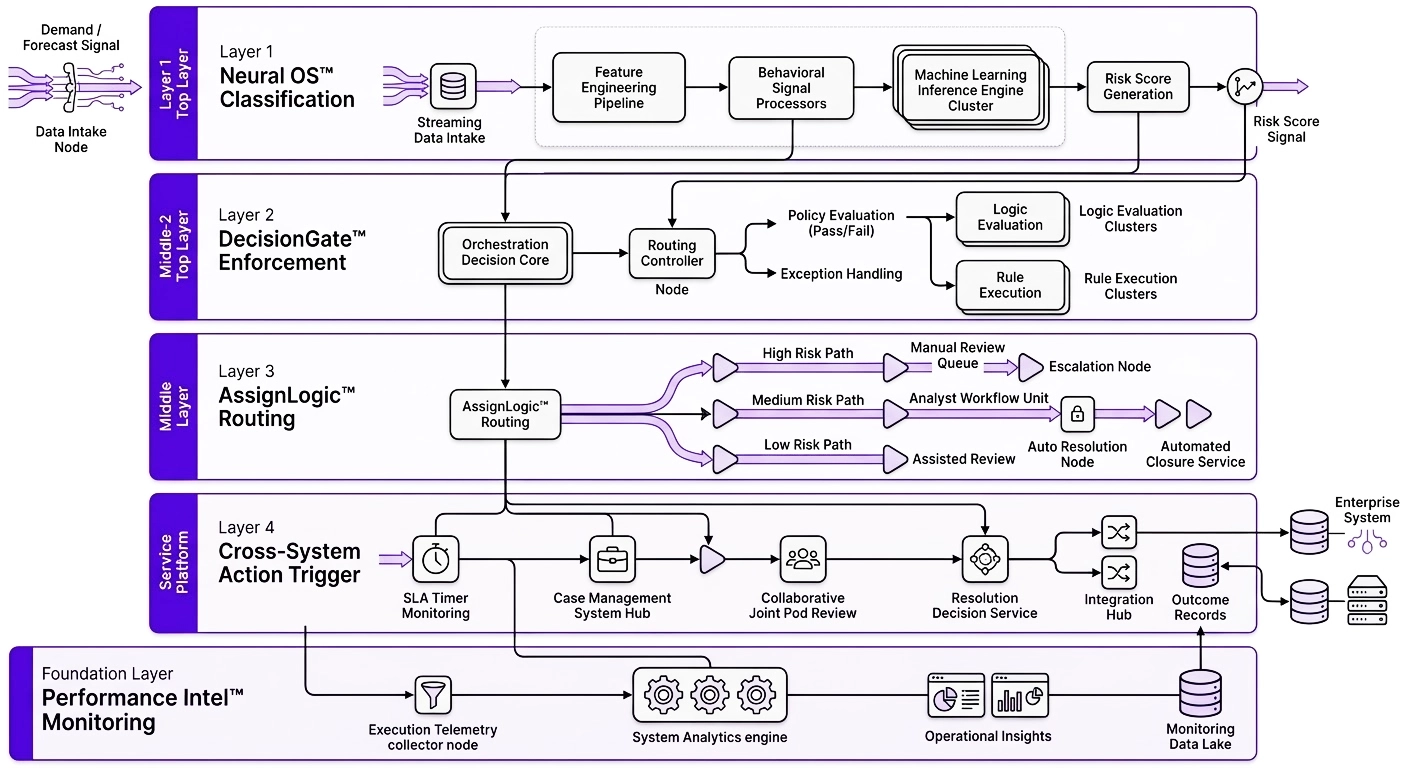
Powered by our Digital Governance OS, we established an absolute rule: no action across any department was valid unless it was routed through the central decision logic. Email was permanently removed as an operational authority.
Core Structural Components of SaaS Orchestration
We stabilized the facility's technology sprawl by deploying four essential structural corrections.
1. Terminology Encoding (SOP Genome™)
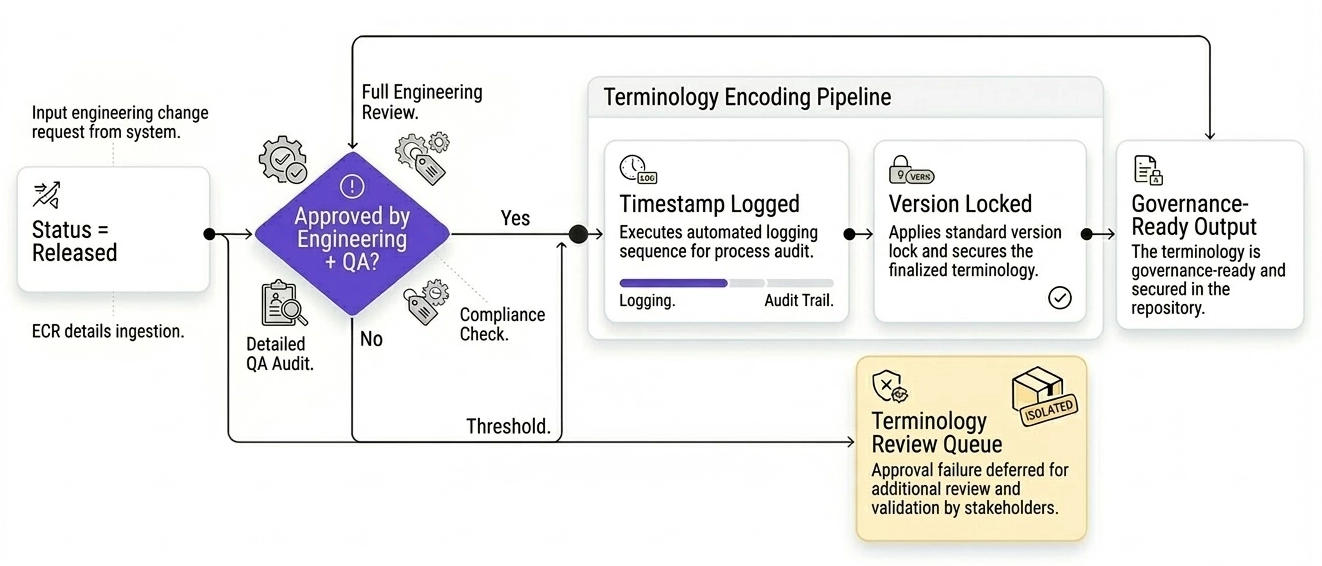
Subjective terminology destroys data integrity. We utilized our Decision Acceleration Systems to strictly encode business logic. For example, a status of "Released" was hard-coded to require both Engineering and QA approvals simultaneously, generating a locked timestamp. Language became mathematically executable, ensuring AI models trained on consistent, clean logic.
2. AI-to-Execution Binding
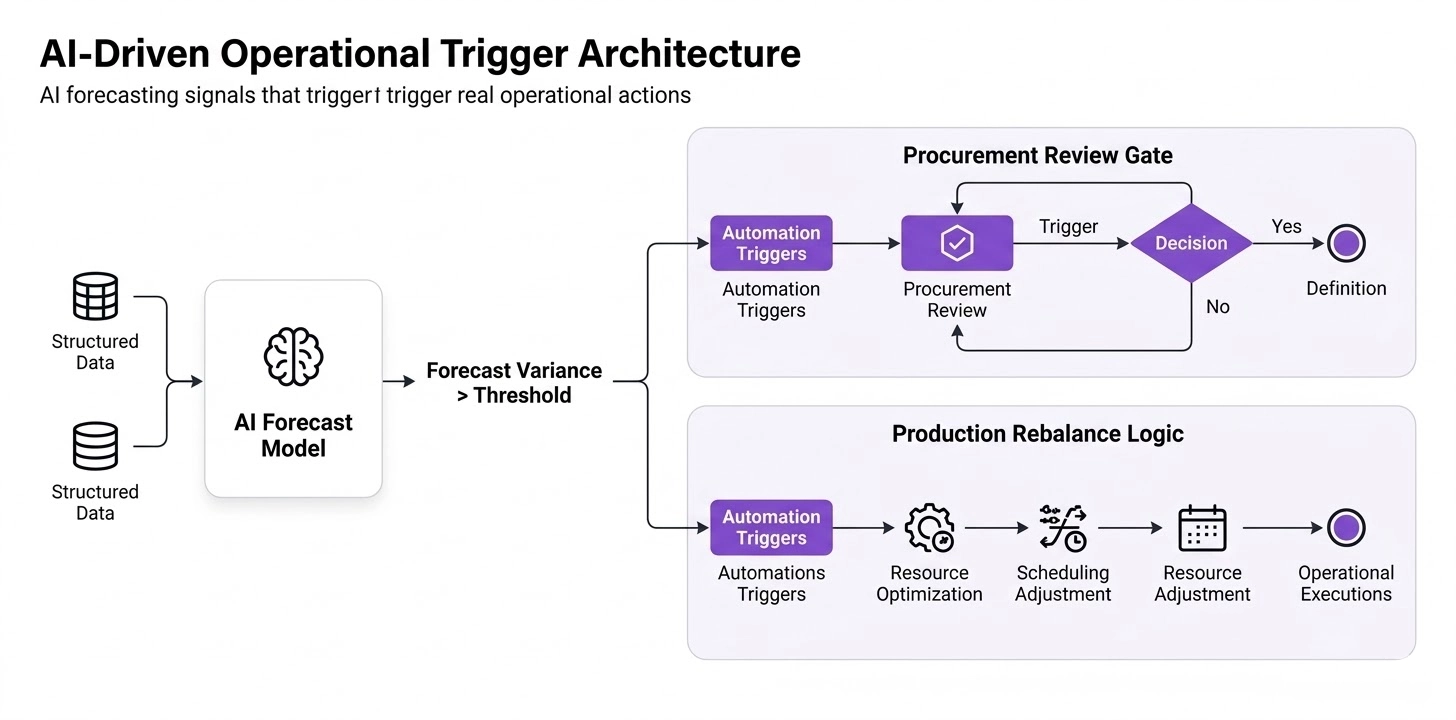
AI that only generates a report is just an expensive dashboard. We transformed the AI forecasting models from advisory tools into operational drivers. If the forecast variance exceeded an encoded threshold, the system automatically triggered a Procurement Review Gate and executed production rebalance logic. AI was finally integrated directly into the workflow.
3. Structured Approval Architecture
We eradicated email-based approvals entirely. Using a custom deployment of DecisionGate™, approvals were converted into encoded gates featuring strict role-based authority, automated escalation timers, and version control locking. Ambiguity regarding who approved what, and when, was eliminated.
4. Cross-System Visibility Layer
Using Performance Intel™, leadership gained visibility across the entire software stack. The system tracked forecast-to-order deviation, approval cycle times, cross-department delays, and importantly, the frequency of Excel overrides. Shadow systems were exposed and structurally decommissioned.
Operational Implementation
Structuring a fragmented technology stack requires a deliberate, phased rollout to prevent organizational rejection.
| Implementation Phase | Focus Area | Outcome Delivered |
|---|---|---|
| Phase 1: Diagnostics | Identifying shadow systems (Excel/Email) overriding the ERP | Baseline mapping of true operational execution paths |
| Phase 2: Encoding | Defining SOP Genome™ rules for core terminology | Elimination of subjective statuses (e.g., "Critical Part") |
| Phase 3: Integration | Binding AI forecast models to Intelligent Execution Engine triggers | AI shifted from advisory reporting to workflow automation |
| Phase 4: Visibility | Deploying Performance Intel™ cross-system dashboards | Real-time tracking of approval cycles and ERP overrides |
Measuring Operational and Financial Impact
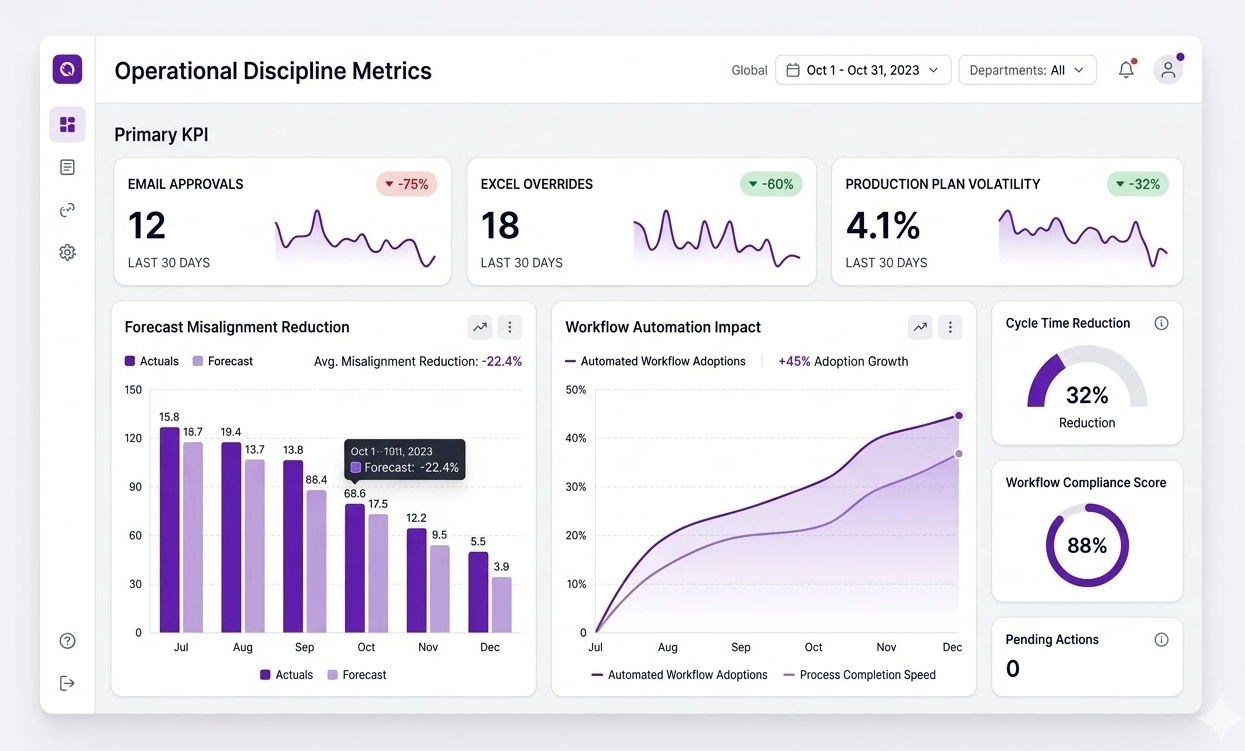
Following a 6-9 month stabilization period, the organization saw its massive digital investments finally begin producing measurable operational returns.
| Execution Discipline Metric | Measured Impact |
|---|---|
| Email-Based Approvals | Reduced by 75% |
| Excel Overrides | Reduced by 60% |
| Production Plan Volatility | Reduced by 32% |
| Forecast-to-Procurement Misalignment | Reduced by 28% |
| Approval Cycle Time | Reduced by 40% |
| Financial & Stability Metric | Measured Impact |
|---|---|
| Inventory Excess | Reduced by 15% |
| Rework Incidents | Reduced by 18% |
| Overtime Dependency | Reduced by 14% |
| Capital Efficiency | Improved materially |
| ROI on AI Systems | Became highly measurable |
Measured Outcomes
The company did not need new software; it needed execution architecture. By establishing structured orchestration, capital efficiency improved, overtime reliance dropped, and the firm finally secured the Growth Systems ROI they had expected from their initial digital transformation.
| Operational Vector | Legacy State | Structured State |
|---|---|---|
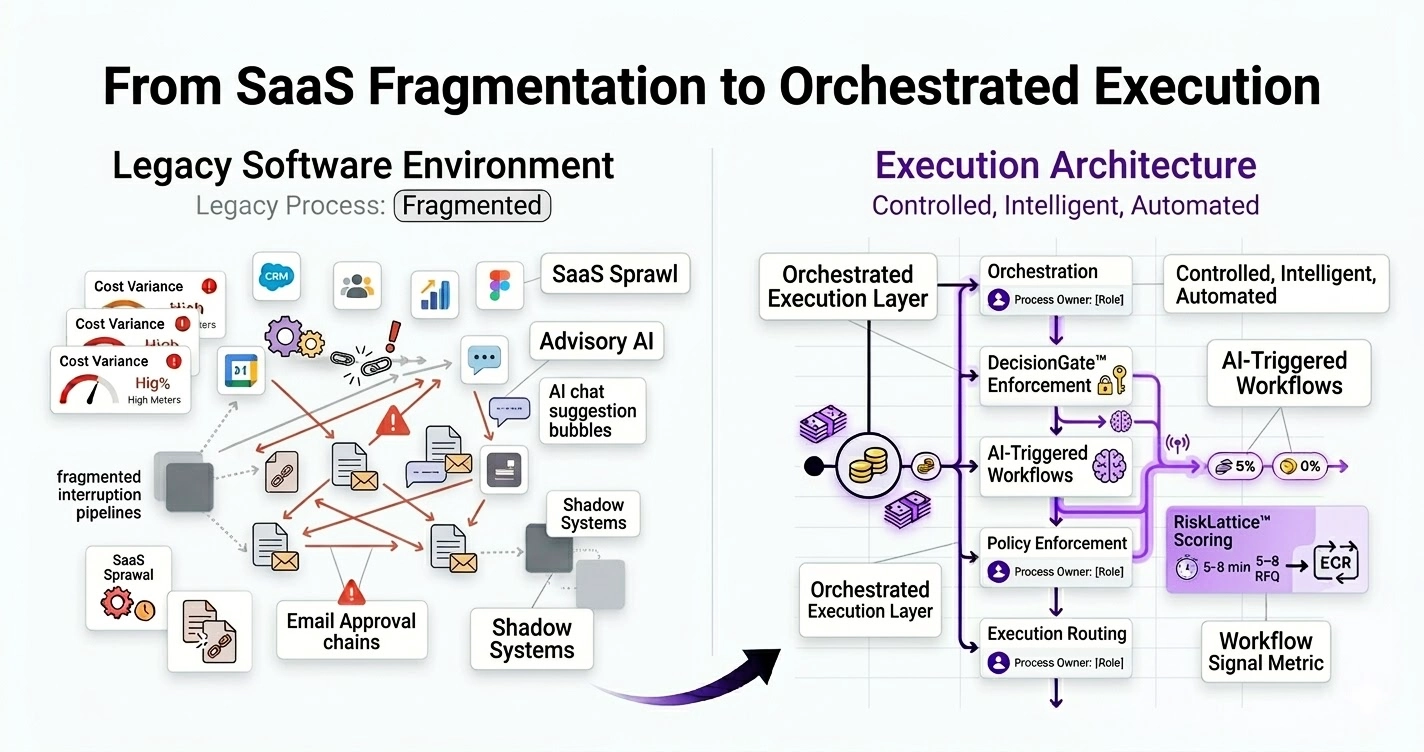
| System Topology | Unmanaged SaaS sprawl | Orchestrated execution layer |
| Approval Authority | Email and verbal approvals | DecisionGate™ strict enforcement |
| Language / Data | Undefined, subjective terminology | Encoded logic definitions |
| AI Utility | Advisory and disconnected | AI-triggered automated workflows |
| Shadow Systems | Prevalent Excel workarounds | Structured, unified confirmation logs |
Strategic Insights on Digital Discipline and AI
This engagement confirms several critical insights for manufacturing leaders attempting to implement SmartOps™ across complex technology stacks.
1. Software is Not a Strategy
Digital transformation fails when software multiplies without underlying operational orchestration. Software stores data; architecture executes work.
2. Email is a Vulnerability
If your ERP tells you one thing, but your team waits for an email to actually start production, your ERP is functionally useless. Confirmation must lack ambiguity.
3. Definition Precedes AI
AI models trained on inconsistent language and subjective definitions will produce inconsistent outputs. Terminology must be mathematically encoded first.
4. AI Must Be Executable
Deploying AI to generate a report is a waste of capital. AI must be integrated directly into the workflow to trigger automated gates and rebalance logic.
5. Shadow Systems Hide Loss
Excel spreadsheets that override master systems are where margin leakage hides. An execution architecture exposes and eliminates these shadow processes.
6. Discipline Drives ROI
Technology investment does not translate into operational stability without digital discipline. Orchestration is the bridge between capital spent and ROI realized.
Where This Applies
The Quanzar Manufacturing Execution Architecture™ is purposefully designed to rescue disjointed digital transformations. It is highly applicable for:
- Mid-market manufacturers suffering from severe SaaS sprawl
- Operations teams struggling with disconnected ERP, MES, and PLM systems
- Organizations investing in AI models that are failing to drive workflow ROI
- Firms seeking to eliminate email and Excel as unofficial systems of record
Architect Your Digital Execution
Is your technology sprawl creating execution chaos instead of efficiency?
Book a Diagnostic Calculate Operational Waste Explore SmartOps™