
Seven Systems, Zero Visibility: Fixing a Manufacturer's AI ROI Problem
Executive context
A mid-sized manufacturer had spent five years on digital transformation. On paper, they were ahead of the curve: an ERP, an MES, dedicated procurement software, quality management software, a maintenance tracking tool, a BI dashboard suite, and AI forecasting models layered on top. Leadership believed the technology investment had paid off.
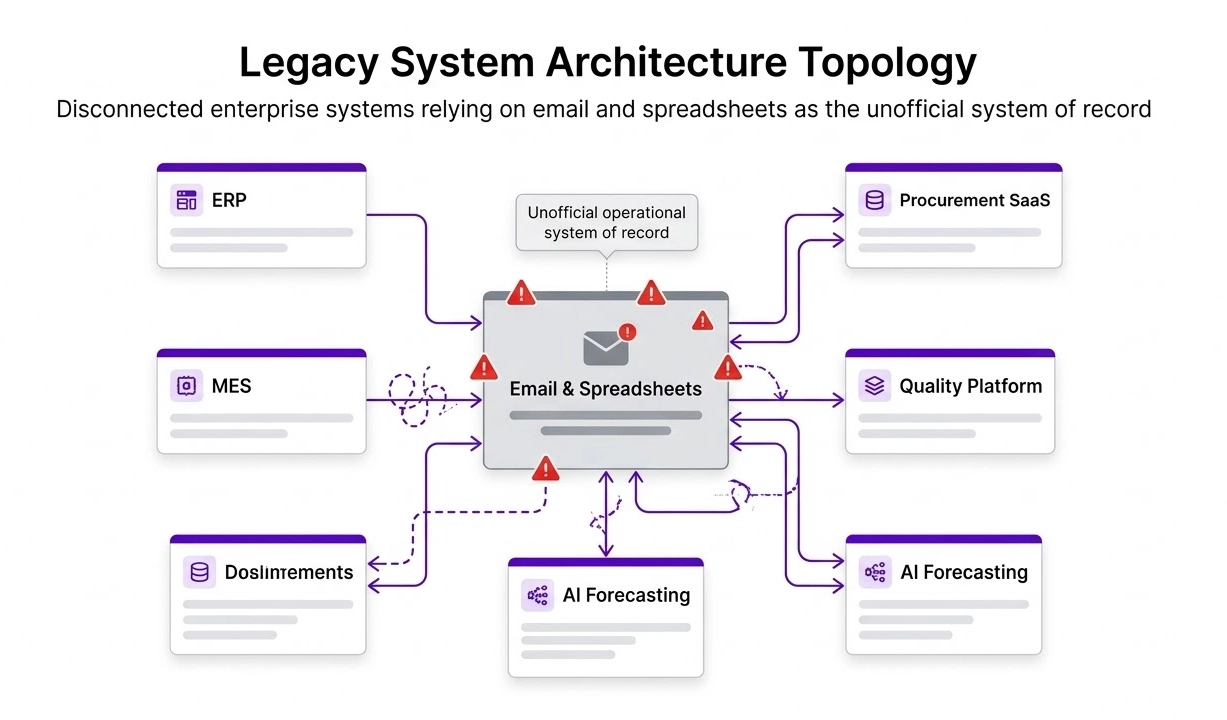
Operationally, it had not. Every department worked inside its own system with no shared source of truth. Critical approvals still happened over email and Slack. "Released to production" meant something different to engineering than it did to QA. The AI forecasting models produced reports nobody acted on. Margin kept slipping and nobody could trace it back to a cause, because the data needed to trace it was scattered across seven tools that didn't talk to each other.
Leadership ran Quanzar's free Margin Leak Audit expecting the problem to be pricing. The audit pointed somewhere else entirely: the systems they already owned were not connected to the decisions being made on the floor.
What the audit found
The diagnostic looked past the BI dashboards and traced how decisions actually got made. The software was modern. The execution behind it was not.
| What the audit surfaced | Operational reality | Margin impact |
|---|---|---|
| Email as the real system of record | Critical approvals happened over email and Slack, outside any system. | No traceable owner of decisions, no audit trail. |
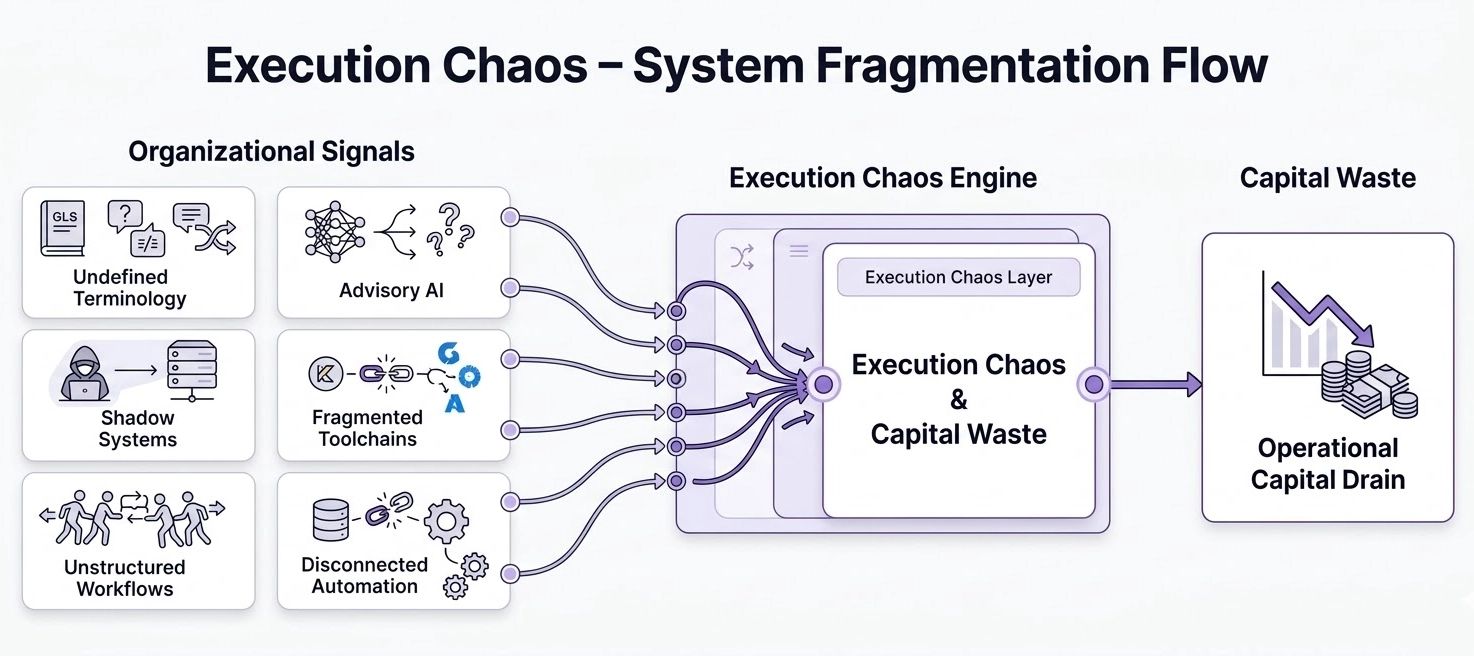
| No shared definitions | "Released" and "critical part" meant different things to different teams. | Misinterpretation drove rework and daily plan changes. |
| AI built to inform, not act | Forecast models existed but had no link to procurement triggers. | AI spend with no measurable workflow ROI. |
| Excel silently overriding the ERP | Spreadsheets routinely replaced ERP data with no log of the change. | Duplicate part records, conflicting KPI numbers. |
What we built in the 60-day pilot
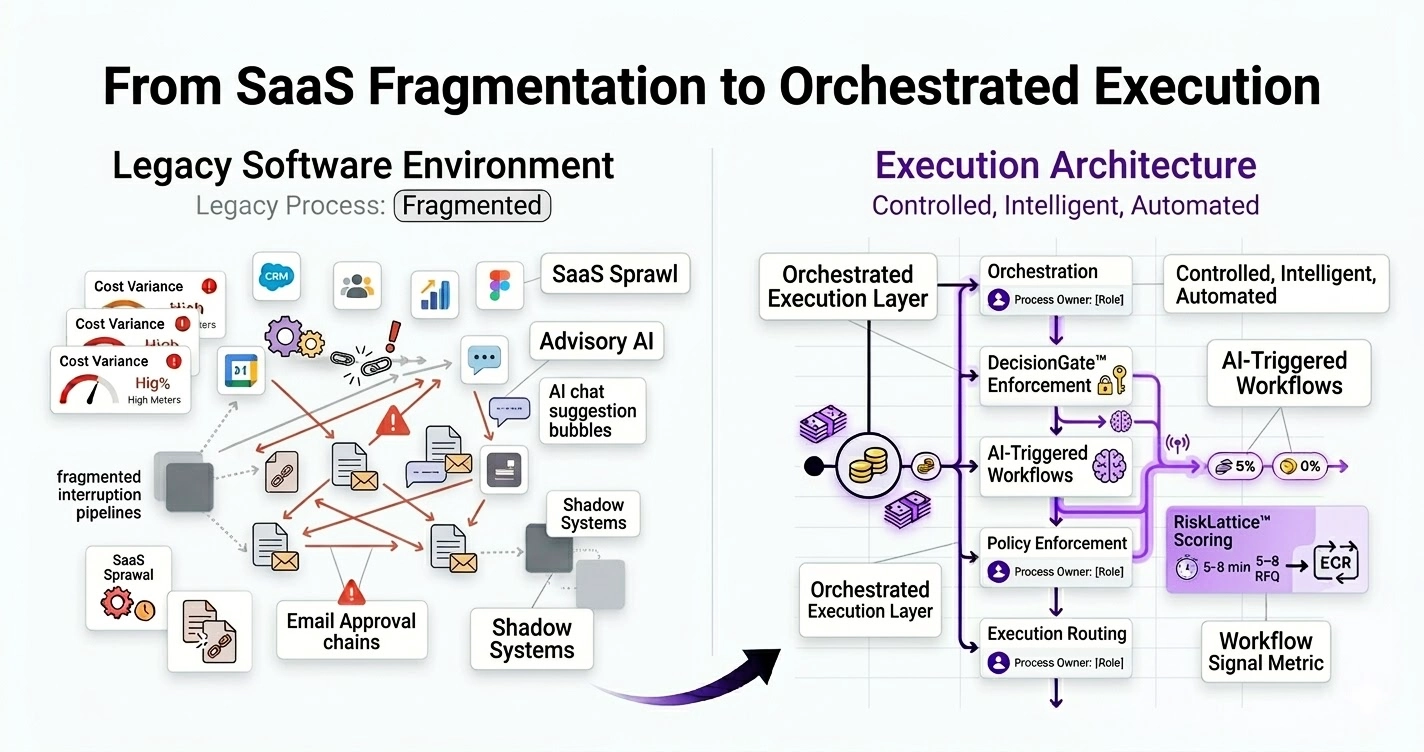
The instruction to the team was strict: add nothing. No new software to fix a software problem. Instead we connected the systems already in place, read-only, and layered two products on top: the Margin Intelligence Dashboard for cross-system visibility, and the AI Ops Layer to turn the existing forecast models from a report nobody read into a workflow that acted on its own outputs.
Three capabilities deployed in the pilot
1. One live margin view instead of seven disconnected reports
The Margin Intelligence Dashboard pulled job cost, procurement, and quality status into a single live view. For the first time, leadership could see margin drift back to its source — a misrouted approval, a stale forecast, a part status nobody had updated — instead of guessing at month-end.
2. AI forecasting turned into a workflow, not a report
The forecast models did not change. What changed is what happens when the forecast moves. If variance exceeds a threshold the team defines, the AI Ops Layer automatically drafts a procurement review and assigns it, with a full audit trail of what triggered it and who approved it. The AI went from generating a report nobody opened to triggering a workflow somebody acted on.
3. Email removed as the decision authority
Approvals now run through a logged workflow with role-based authority and an automatic escalation timer instead of an inbox. Every action is timestamped and labeled AI or human, so the team, the controller, and the auditor can all trace any decision back to its source.
How the pilot was rolled out
| Phase | Focus | Outcome |
|---|---|---|
| Free Margin Leak Audit | Job and forecast data reviewed across all seven systems | $340K in annual leakage identified, root cause traced to disconnected systems |
| 30-minute diagnostic call | Mapped which approvals and overrides were costing the most | Pilot scoped around the two highest-leverage workflows |
| 60-day pilot | Margin Dashboard live, AI Ops Layer bound to forecast triggers | $198K recovered, email approvals down 75% |
| Scale | Extend AI Ops workflows to quality and maintenance systems | Full cross-system audit trail, no remaining shadow spreadsheets |
Measured impact
| Execution metric | Measured impact |
|---|---|
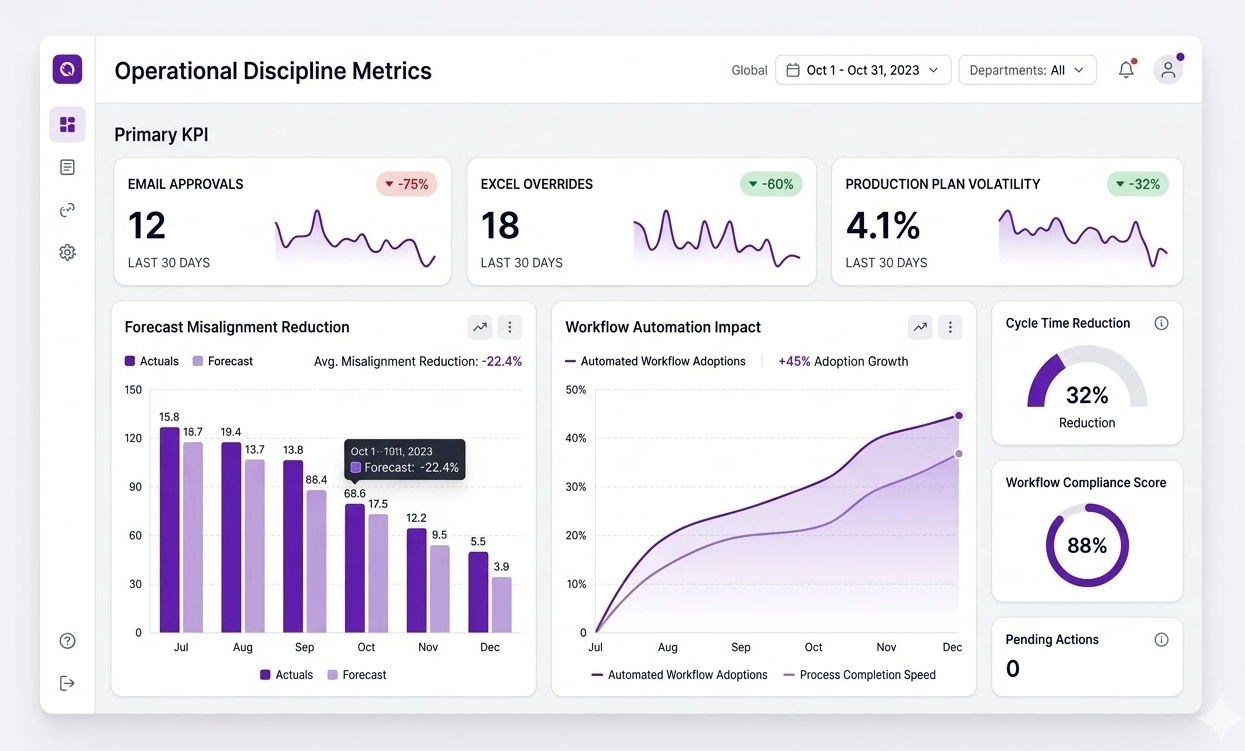
| Email-based approvals | Reduced by 75% |
| Excel overrides of ERP data | Reduced by 60% |
| Production plan volatility | Reduced by 32% |
| Forecast-to-procurement misalignment | Reduced by 28% |
| Financial metric | Measured impact |
|---|---|
| Margin recovered in pilot | $198,000 |
| Inventory excess | Reduced by 15% |
| Rework incidents | Reduced by 18% |
| Approval cycle time | Reduced by 40% |
Strategic insights
1. Software is not the same as visibility
Seven systems generated seven different versions of the truth. None of them, alone, showed where margin was actually going.
2. Email is where accountability goes to disappear
If a decision lives in an inbox, it cannot be audited, measured, or improved.
3. Advisory AI is a sunk cost until it triggers a workflow
A forecast model that nobody acts on is an expensive dashboard, not an operational asset.
4. Shadow spreadsheets hide the leak, not the cause
Excel overriding the ERP is usually a symptom of a system nobody trusted, not a rogue habit.
5. Governance is what makes AI safe to scale
A defined boundary and a human-approval threshold are what let the team trust the automation enough to expand it.
6. Read-only first, always
None of this required replacing a system the team already knew how to use. It required connecting them.
Where this applies
This pilot model fits manufacturers who have invested heavily in software but cannot trace where the investment shows up in margin. It applies well to:
- Mid-market manufacturers running ERP, MES, and procurement tools that don't talk to each other
- Operations teams relying on email or Slack for critical approvals
- Organizations with AI forecasting models that produce reports, not actions
- Teams that suspect Excel is quietly overriding their system of record
Find out what your systems already know
Enter data from your last 5 to 15 jobs. Get a one-page margin leak report in about 10 minutes — no sales call required.
Run Your Free Margin Audit → Book a Diagnostic Call