
Engineering Operational Intelligence Across 1.5B+ High-Compliance Records
Executive Context
A leading multi-sector industrial distributor supplying the semiconductor, aerospace, and medical sectors was facing a critical data crisis. The enterprise was managing over 1.5 billion part records across highly incompatible ecosystems. The company did not lack data; it lacked operational coherence across that data.
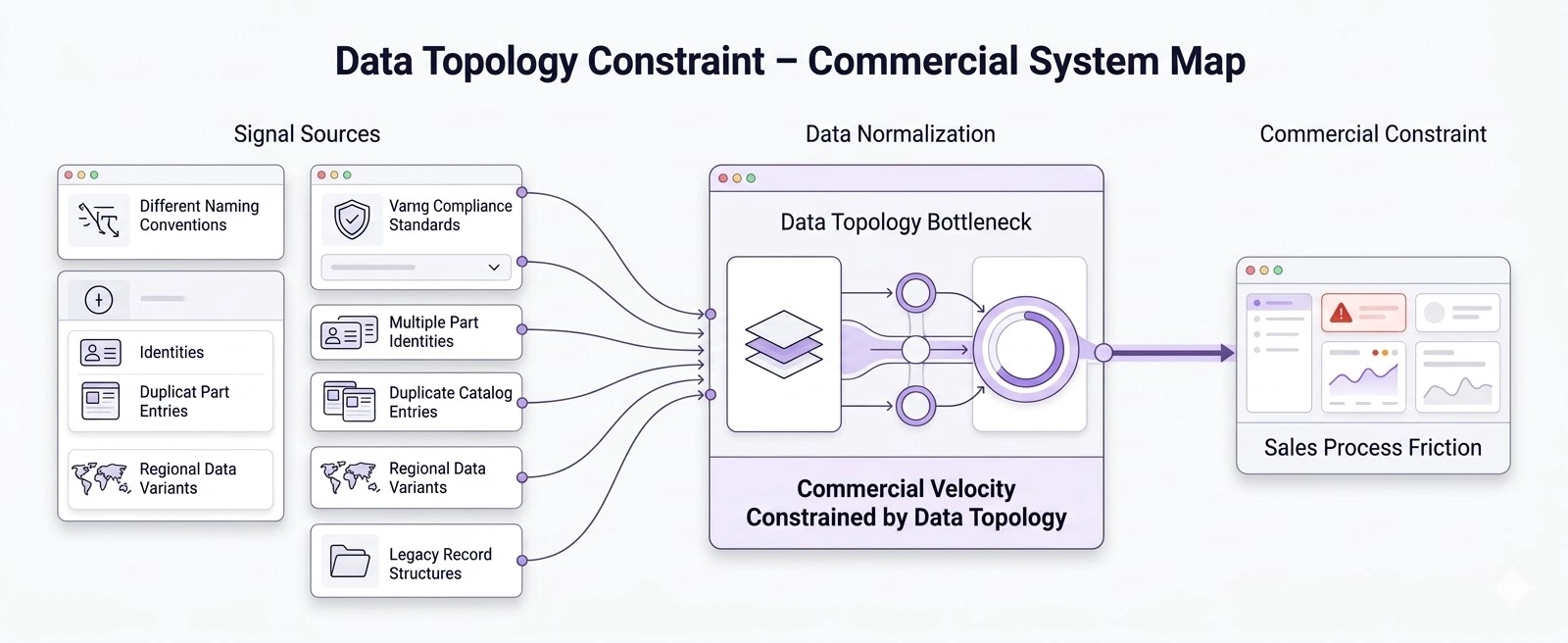
Each industry vertical operated with entirely different naming conventions, unique compliance requirements, discrete supplier structures, and rigid traceability expectations. As a result, commercial velocity was severely constrained. RFQ (Request for Quote) response cycles averaged 60 minutes, primarily consumed by manual data cleaning, alternate part verification, and cross-system reconciliation. When data ecosystems fail to communicate objectively, operational friction erodes both margin and customer trust.
The enterprise engaged Quanzar Technologies™. We immediately identified that the failure was not a technical storage issue. It was an architectural execution failure.
Initial Operational Topology
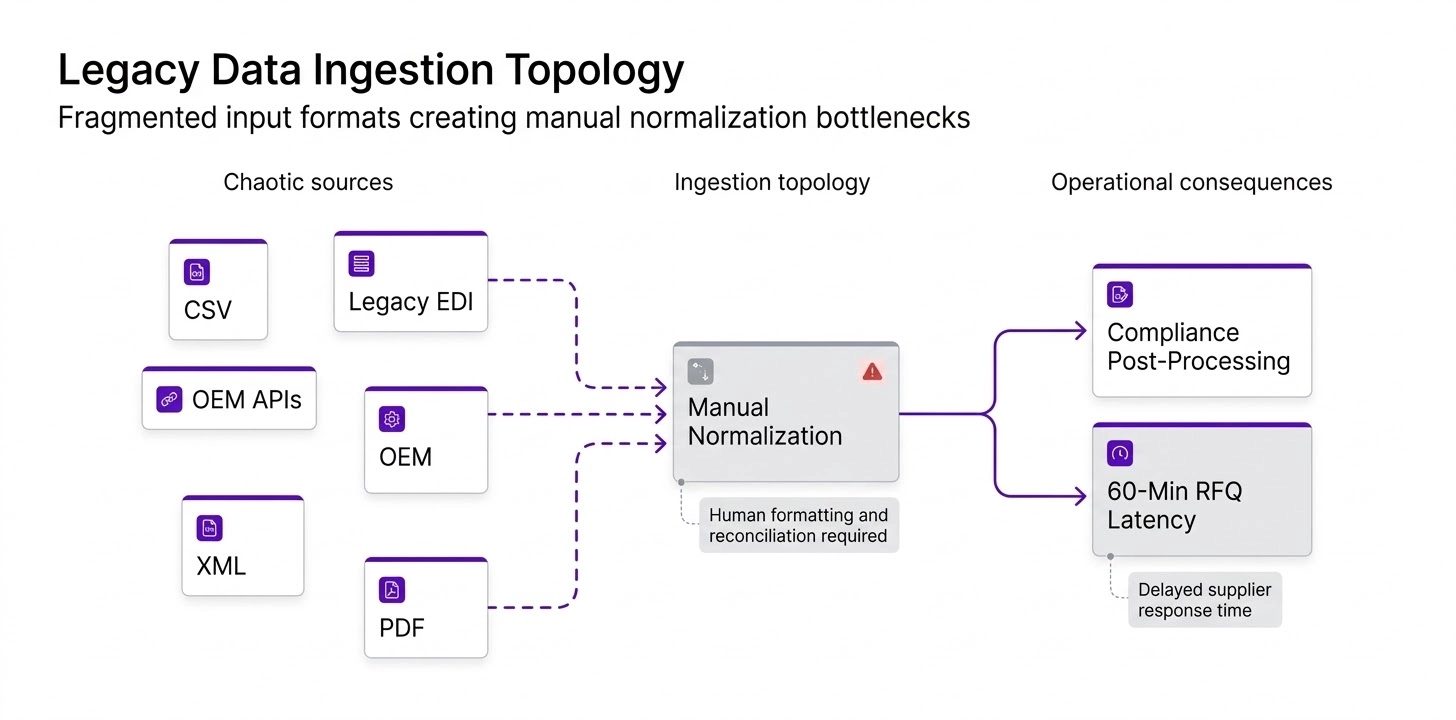
Our initial diagnostic mapped the legacy data ingestion framework, exposing the structural breakdowns causing downstream commercial latency.
| Structural Breakdown | Operational Reality | Commercial Impact |
|---|---|---|
| Fragmented Ingestion | Data arrived chaotically via CSV, EDI, API, XML, and PDF. | Ingestion failures routinely caused downstream disruption. |
| No Unified Identity | A single component had an OEM reference, an internal code, and a medical ID. | Cross-system reconciliation required manual human intervention. |
| Reactive Compliance | ISO 13485 and AS6081 traceability applied post-processing. | High exposure to regulatory risk and compliance bottlenecks. |
| Execution Latency | Manual alternate part verification was required per quote. | RFQ response cycle bottlenecked at ~60 minutes. |
The Transformation Strategy
We did not build another static data lake. Data lakes store information; they do not execute logic. Instead, we engineered the Quanzar Core™ Data Execution Layer, an Operational Data Orchestration Architecture governed by our AI Ops Layer.
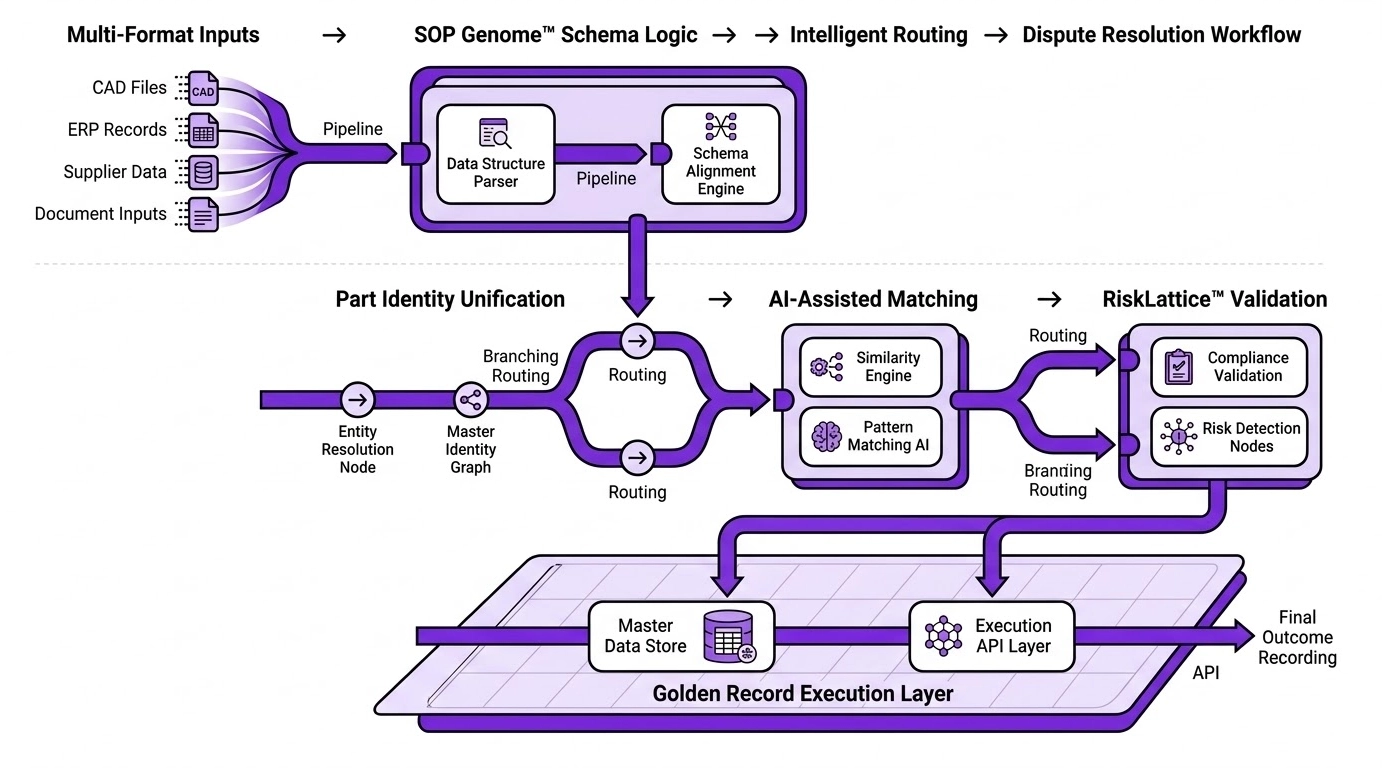
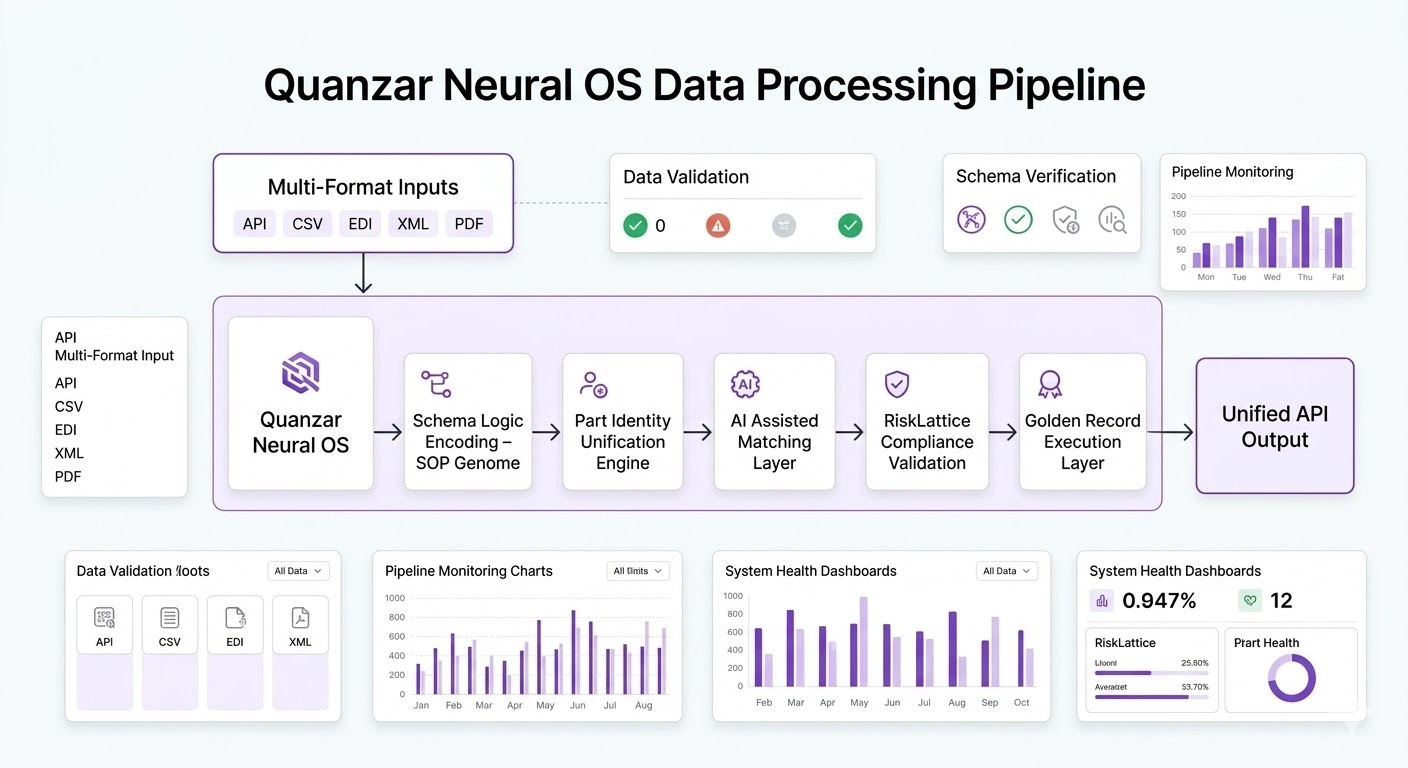
Deployed on a high-availability cluster in US-East-1, this architecture processes inputs through strict logic gates, validating compliance and identity before the data is allowed to trigger a downstream operational event.
Core Structural Components
We transformed the data topology through four distinct architectural shifts.
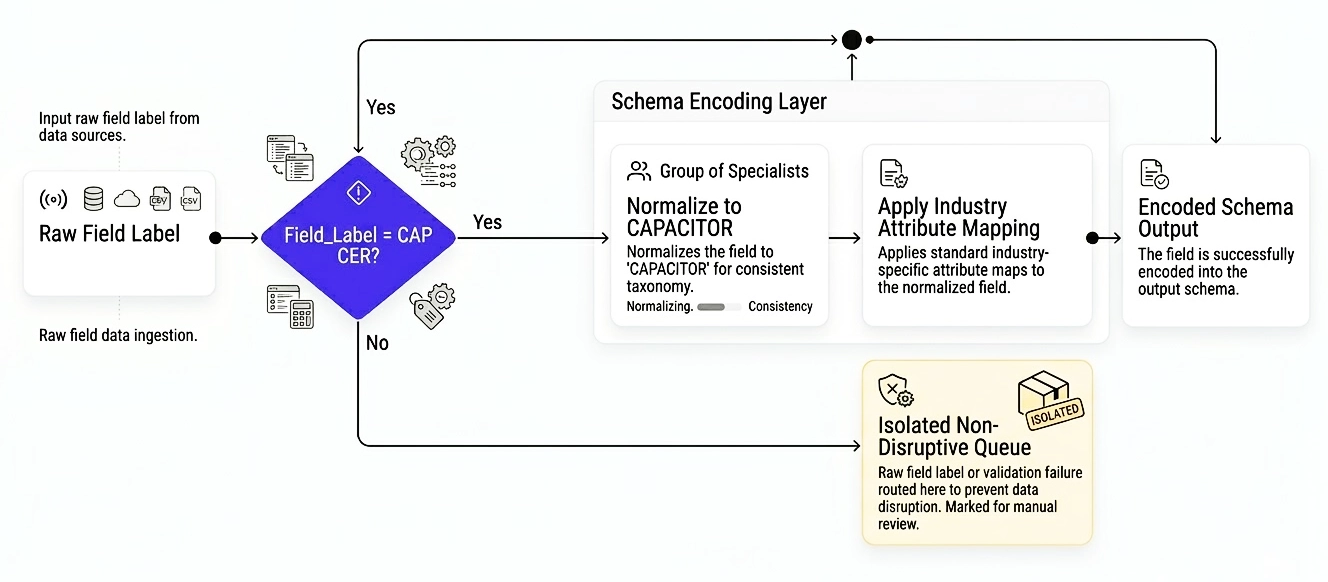
1. Schema-Less Governance (SOP Genome™)
Instead of relying on rigid, fragile mapping tables that break when a supplier changes a column header, we encoded schema logic into micro-rules using our AI Ops Layer. Schema conflicts are now isolated intelligently without halting the broader ingestion pipeline.
2. Golden Record Identity Architecture
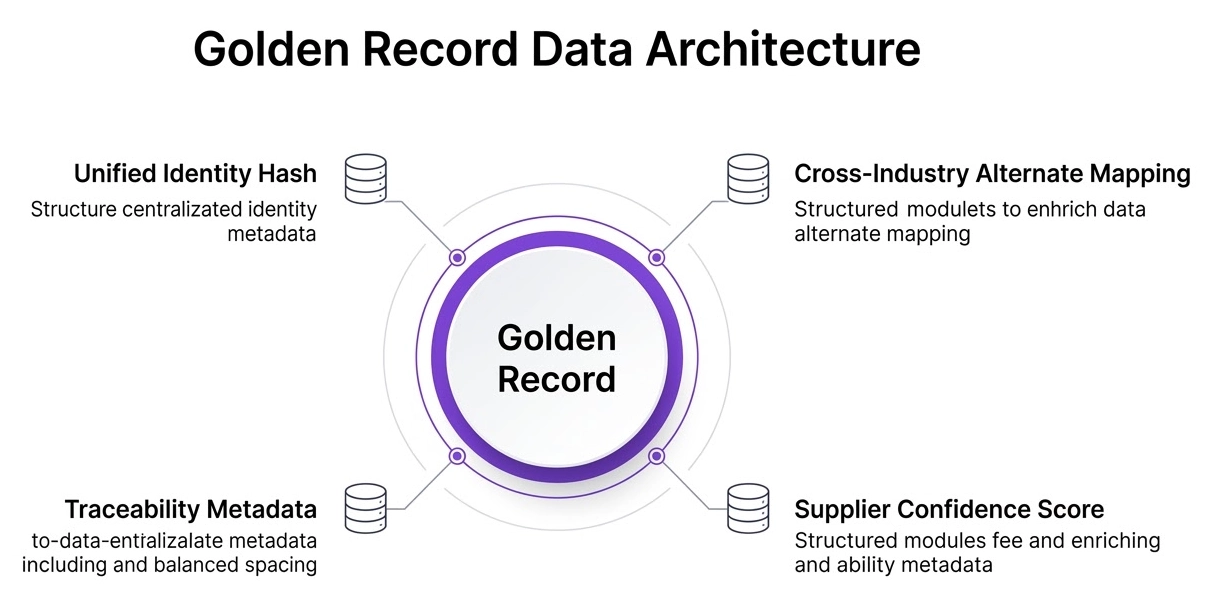
We eliminated the confusion of multiple part identities. Every ingested component now receives a unified identity hash. This record contains cross-industry alternate mapping, a supplier confidence score, compliance validation status, and strict traceability metadata. Duplicate entries were significantly reduced, creating a single source of operational truth.
3. Embedded AI Matching Layer
Using our AI Ops Layer, we deployed transformer-based models to identify alternate equivalents, flag low-confidence mappings, and suggest cross-industry substitutions. Operating at a 92.4% validated confidence rate, AI accelerates the matching process but requires governance validation—it does not override compliance.
4. Compliance Embedded in Flow (RiskLattice™)
Compliance became architectural, not procedural. RiskLattice™ enforces ISO 13485 reference checks, AS6081 traceability requirements, and supplier certification validation in real-time. Built on our Secure by Design Architecture, records failing validation are automatically isolated and are never passed downstream.
Operational Implementation
Processing 1.5 billion records required a methodical rollout to prevent data corruption.
| Implementation Phase | Focus Area | Outcome Delivered |
|---|---|---|
| Phase 1: Logic Encoding | Defining SOP Genome™ rules for varied inputs | Elimination of manual EDI error handling |
| Phase 2: Unification | Deploying the Part Identity Unification Engine | Creation of the baseline Golden Record model |
| Phase 3: AI Orchestration | Activating transformer-based matching models | Automated cross-industry alternate mapping |
| Phase 4: Compliance Gates | Enforcing RiskLattice™ ISO/AS6081 validation | Embedded, zero-trust regulatory isolation |
Performance Measurement
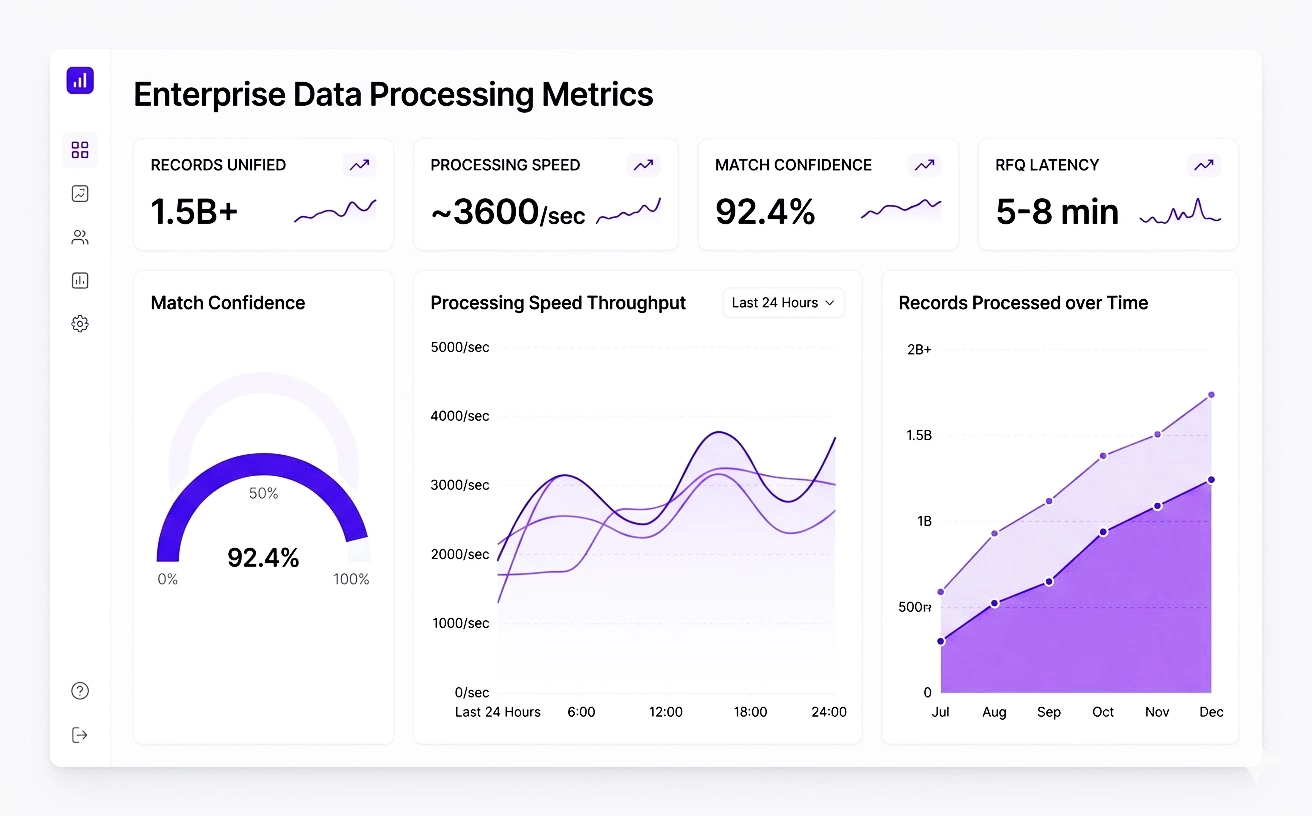
At Quanzar, operational intelligence is measured by execution speed and reliability. The deployed cluster achieves profound processing velocity.
| Execution Performance Metric | Measured Result |
|---|---|
| Records Unified | 1.5B+ |
| Processing Speed | ~3600 records/sec |
| Match Confidence | 92.4% (governed and validated) |
| Ingestion Latency | ~12ms |
| Schema Failures | Isolated natively; non-disruptive to operations |
| Commercial Impact Metric | Measured Result |
|---|---|
| RFQ Response Time | Reduced from ~60 min to ~5–8 min |
| Manual Data Cleaning | Reduced by ~70% |
| Compliance Validation Time | Reduced by ~80% |
| Processing Cost | Reduced by ~5x |
Measured Outcomes
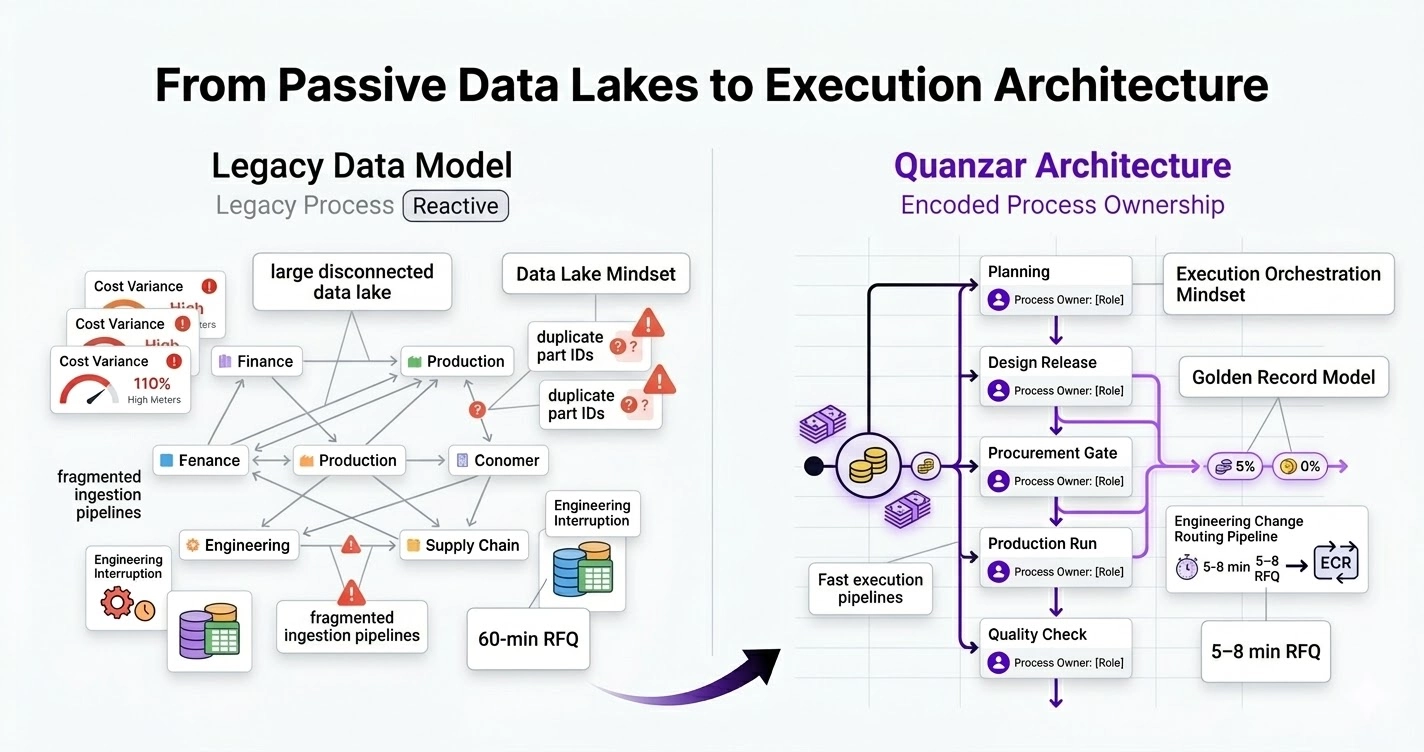
By restructuring how data executes, the organization unlocked a significant revenue lift. This was driven by a profoundly faster quote turnaround, highly accurate alternate mapping, elevated compliance trust, and a massive reduction in operational overhead.
| Operational Vector | Legacy State | Quanzar Architecture State |
|---|---|---|
| Data Philosophy | Data lake storage mindset | Execution orchestration mindset |
| Part Management | Multiple confusing part identities | Unified Golden Record model |
| Error Handling | EDI errors halted data flow | Automated failure isolation |
| Compliance | Manual, reactive post-processing | Embedded architectural compliance layer |
| Commercial Velocity | ~60-minute RFQ cycles | ~5-8 minute RFQ cycles |
Strategic Insights
This deployment highlights fundamental truths for organizations deploying Margin Intelligence and Quote Intelligence in regulated industrial markets.
1. Scale Demands Orchestration
You cannot manually normalize 1.5 billion records. High-volume records without an execution engine create severe latency and margin erosion.
2. Lakes Are Not Engines
A data lake is a repository, not a workflow. Storing fragmented data in one place does not solve the operational need to execute logic upon it.
3. Identity Solves Latency
When an organization lacks a Golden Record identity, employees spend their days reconciling alternate part numbers instead of selling them.
4. AI Must Be Governed
AI is an accelerator, not a compliance officer. Transformer models should suggest and map, but an encoded governance layer must validate the output.
5. Compliance is a Gate
Regulatory checks (ISO, AS6081) must occur in the ingestion flow, acting as a gate. Post-processing compliance exposes the firm to immense risk.
6. Schema Rigidity Fails
Relying on strict mapping tables guarantees failure when supplier formats change. Schema logic must be encoded as flexible micro-rules.
Where This Applies
The Quanzar Core™ Data Execution Layer is engineered for highly complex, multi-format data environments where speed and strict compliance intersect. It is highly applicable for:
- Aerospace and defense distributors requiring strict AS6081 traceability
- Medical device manufacturers managing ISO 13485 component tracking
- Semiconductor brokers relying on rapid alternate-part cross-referencing
- Global supply chains overwhelmed by fragmented EDI and API ingestion
Architect Your Data Execution
Is your data topology creating commercial latency and margin leakage?
Book a Diagnostic Run Free Margin Audit Explore Margin Intelligence