Ownership Mapping: The Framework for Radical Accountability
- Introduction
- Why RACI Is No Longer Enough
- Ownership Mapping 101
- Building the Ownership Mapping Framework
- Integrating Ownership Mapping with Your Tech Stack
- Measuring Success
- Frequently Asked Questions
Introduction
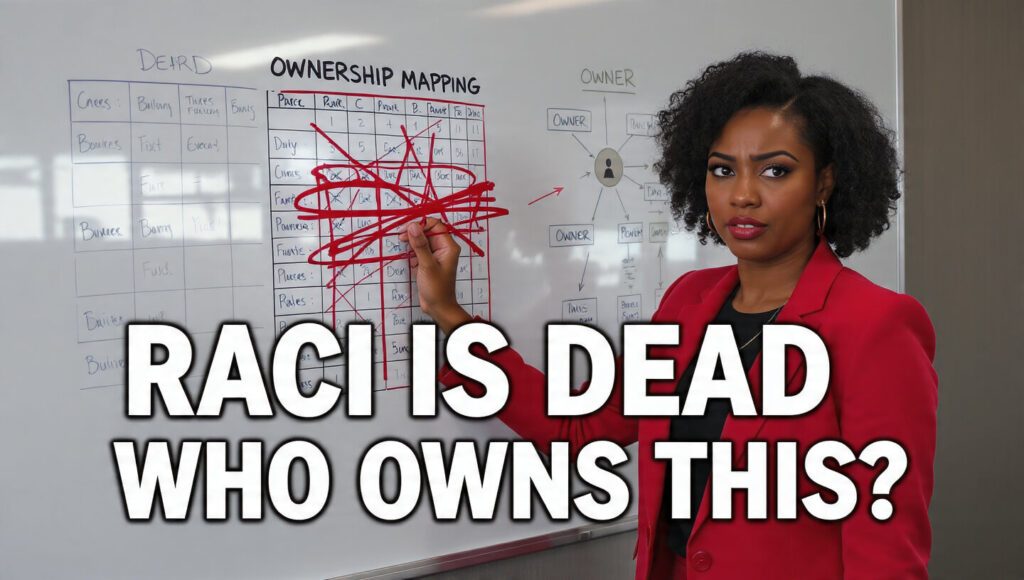
For decades, managers have leaned on the RACI matrix to clarify who Responsible, Accountable, Consulted, and Informed about a task. The reality on the ground, however, tells a different story. Teams are fragmented, decisions bounce between silos, and accountability evaporates when the matrix is treated as a checklist rather than a living contract. Enter Ownership Mapping—a modern, purpose‑driven approach that replaces static roles with dynamic, outcome‑focused ownership.
Why RACI Is No Longer Enough
RACI’s simplicity is both its strength and its Achilles’ heel. It assumes that every decision can be neatly boxed into one of four buckets. In fast‑moving digital enterprises, that assumption collapses under the weight of cross‑functional initiatives, rapid pivots, and continuous delivery cycles.
- Ambiguity in accountability: “Accountable” often becomes a vague safety net.
- Over‑consultation: Teams spend more time seeking approvals than delivering value.
- Static assignments: Roles rarely evolve as projects mature, leading to ownership fatigue.
When you pair a weak RACI implementation with a sprawling digital transformation, the result mirrors the warning in Why Digital Transformation Fails Without Workflow Architecture. Without a fluid framework that adapts to real‑time demands, initiatives stall, budgets balloon, and morale dips.
Ownership Mapping 101
Ownership Mapping reframes responsibility as a continuum of ownership rather than a binary label. It asks three core questions for every deliverable:
- Who owns the outcome?
- What decision rights does that owner hold?
- How is performance measured against the agreed‑upon goal?
Unlike RACI, which can leave “Accountable” dangling, Ownership Mapping ties each owner to a clear metric and a decision‑making authority. The result is radical accountability—every stakeholder knows exactly what success looks like and how they contribute.
Building the Ownership Mapping Framework
Transitioning from RACI to Ownership Mapping requires a deliberate, step‑by‑step process. Below is a practical playbook you can roll out in a single sprint.
1. Map Critical Business Processes
Start with the processes that drive revenue, compliance, or customer experience. Visualize each step in a flowchart and identify hand‑offs.
2. Assign Outcome Owners
For every node, designate an Outcome Owner—the person who ultimately owns the result, not just the activity. Document their decision rights in a concise “Ownership Charter.”
3. Define Success Metrics
Pair each owner with a KPI that reflects the true impact of their work. Example: “Reduce order‑to‑cash cycle time by 15%” instead of “Complete invoice entry.”
4. Embed Review Gates
Insert lightweight review checkpoints where owners validate progress against metrics. These gates replace endless “consulted” loops.
5. Communicate Transparently
Publish the Ownership Map on a shared platform. Visibility ensures that every team member can see who owns what, fostering trust and reducing duplication.
When you align this framework with a broader operating model, you’ll notice the synergy highlighted in Building a Target Operating Model (TOM) That Drives Scalability. A well‑designed TOM provides the structural backbone that lets Ownership Mapping thrive at scale.
Integrating Ownership Mapping with Your Tech Stack
Ownership Mapping is a people‑first methodology, but technology amplifies its impact. Here’s how to weave it into your existing ecosystem.
- Digital Governance OS™: Leverage Quanzar’s Digital Governance OS™ to codify ownership charters, automate KPI tracking, and enforce decision‑right policies across cloud and on‑prem environments.
- SmartOps™ for Businesses: Use SmartOps™ to surface real‑time performance dashboards that surface ownership gaps before they become bottlenecks.
- Operational Intelligence Layer: The insights from The Operational Intelligence Layer: The Secret to Flawless Execution feed directly into your ownership metrics, turning data into actionable accountability.
By embedding Ownership Mapping into these platforms, you create a feedback loop where data validates ownership, and ownership drives data quality—a virtuous cycle that fuels continuous improvement.
Measuring Success
Transitioning to Ownership Mapping is only worthwhile if you can prove its ROI. Track these leading indicators:
| Metric | What It Shows |
|---|---|
| Decision‑Latency Reduction | Faster approvals, fewer bottlenecks. |
| KPI Alignment Score | Percentage of owners meeting their outcome targets. |
| Cross‑Functional Collaboration Index | Decrease in “consulted” loops per project. |
| Employee Accountability Survey | Improved perception of ownership clarity. |
When these metrics trend upward, you have concrete evidence that Ownership Mapping is delivering the radical accountability promised. For organizations seeking to scale this impact, pairing the framework with Quanzar’s Growth Systems accelerates the feedback loop, turning insights into strategic pivots.
Frequently Asked Questions
What is the main difference between RACI and Ownership Mapping?
RACI assigns static labels to roles, often leaving “Accountable” vague. Ownership Mapping ties each owner to explicit decision rights and measurable outcomes, ensuring that accountability is both clear and enforceable.
Can Ownership Mapping coexist with existing RACI matrices?
Yes. Many organizations start by overlaying Ownership Mapping on top of their current RACI. Over time, the static matrix is retired as ownership charters become the primary governance tool.
How does Ownership Mapping support digital transformation?
By eliminating ambiguous hand‑offs, Ownership Mapping aligns people, process, and technology. This alignment directly addresses the pitfalls described in Why Digital Transformation Fails Without Workflow Architecture, ensuring that transformation initiatives have clear owners and measurable success criteria.
Is specialized software required to implement Ownership Mapping?
While you can start with spreadsheets, leveraging platforms like Digital Governance OS™ or SmartOps™ for Businesses streamlines charter creation, KPI tracking, and real‑time visibility.
What industries benefit most from Ownership Mapping?
Any sector that relies on cross‑functional collaboration—finance, healthcare, manufacturing, and technology—sees immediate gains. Explore the full list of Industries We Empower to see where Ownership Mapping can drive radical accountability in your market.